Before the larvae chew through your garden, the eggs are already there; tiny, hidden, and easy to miss. Here’s how to spot them in time. There is a simple rule: catch the pest before the hatch, and you win half the battle. Sawflies are one of the sneakiest threats to your landscape. Most folks don’t realize they have a problem until the leaves are skeletonized and the larvae are stripping branches bare. But here’s the thing: if we learn to identify sawfly eggs early, we can stop the damage before it even starts.
Let’s break it down together.
What Exactly Are Sawfly Eggs?
Sawfly eggs are the earliest stage of a pest that looks like a caterpillar but acts like a tiny army. These insects belong to the order Hymenoptera, the same group as bees, wasps, and ants. But unlike their stinging cousins, sawflies use their “saw-like” ovipositor to slice into plant tissue and deposit their eggs.
And yes, that’s where they get their name.
Key traits of sawfly eggs
- Order: Hymenoptera (like bees, wasps, and ants)
- Unique feature: Saw-like ovipositor for cutting into plants
- Behavior: Deposit eggs in groups or “rafts.”
Sawflies laying eggs is a process you want to catch early. Once the eggs hatch, you’re dealing with sawfly larvae that feed in groups, defoliate your plants, and multiply fast. Spotting sawfly eggs on roses, pines, or shrubs before they hatch gives us a massive advantage in pest management.
The earlier we spot them, the fewer chemicals we need. That’s a win for your garden and the environment.
What Do Sawfly Eggs Look Like?
Credit: scoutlabs.ag
One of the most common questions we get is, “What do sawfly eggs look like?”
The answer depends on the species, but here’s the general rule of thumb:
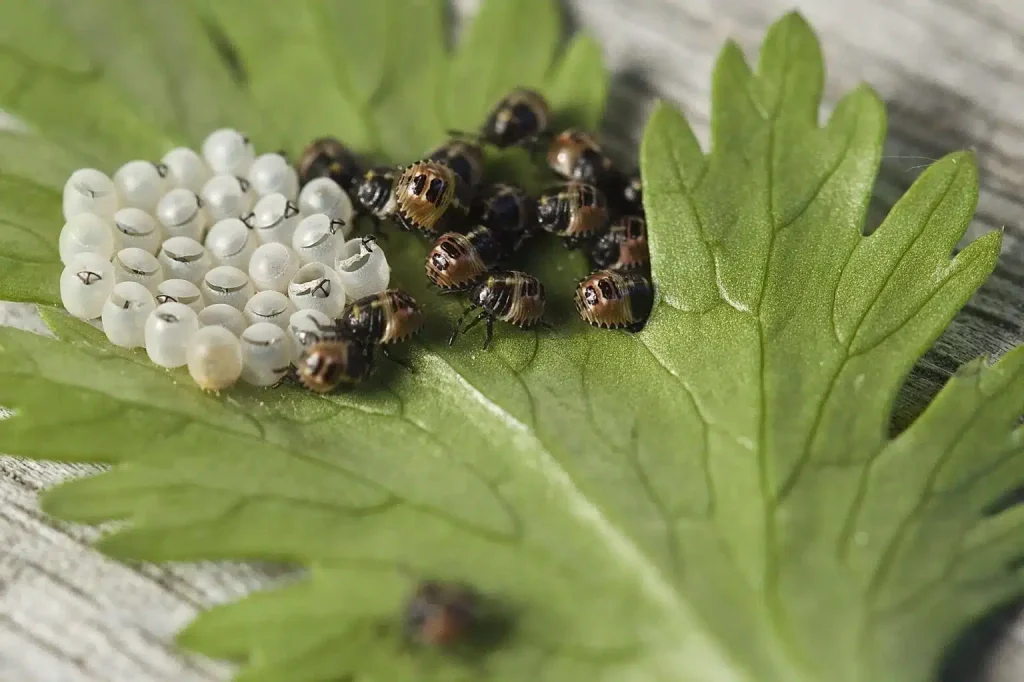
a) They are small and oval-shaped
About the size of a pinhead or a tiny grain of rice.
b) Their color ranges from pale white to yellowish green
They often darken as the embryo develops inside.
c) They are usually laid in neat rows or clusters
Either tucked inside leaf tissue, glued to the surface, or lined up along the edge of a needle.
Here’s what makes them tricky: many species insert their eggs directly into the plant. That means you’re not looking at individual eggs sitting on top, you’re looking for small raised blisters or swellings on the leaf surface.
For example:
- Rose sawfly eggs: laid inside slits along the stem or leaf petiole. Look for tiny, elongated bumps.
- Pine sawfly eggs: arranged in straight rows on pine needles, often looking like pale yellow dots evenly spaced along the green.
- Sawflies eggs on broad-leaf shrubs: often tucked into the leaf margin or along the midvein.
Pro tip from us: Flip the leaf over. Many gardeners check only the top surface and miss the eggs entirely.
Where to Find Sawfly Eggs on Your Plants
Species identification starts with knowing where to look. Every sawfly species has a preferred host plant and a preferred egg laying spot.
Here’s where we most commonly find sawfly eggs:
|
Plant Type |
Where to Check |
What to Look For |
|
Roses |
New stems, leaf petioles, undersides of young leaves |
Tiny raised slits or elongated blisters |
|
Pine trees |
New needles, especially at the base |
Evenly spaced yellow-white dots in rows |
|
Birch, willow, oak |
Leaf edges and veins |
Small pockets or “pita pocket” bulges |
|
Fruit trees |
Young leaves near branch tips |
Clusters of pale, translucent spheres |
If you’re dealing with sawfly eggs on roses, check the tender new growth first. Female sawflies prefer soft, young tissue to make their cuts. If you’re scouting for pine sawfly eggs, focus on the current season’s needles; they’re usually the target.
When Do Sawflies Lay Eggs? (Timing Is Everything)
Credit: animalia.bio
When do sawfly lay eggs? This is the million-dollar question because timing determines whether you prevent or treat.
Here’s the short answer:
- Spring through early summer is the primary egg-laying window for most species.
- Some species, like the European pine sawfly, lay eggs in late summer to fall, and the eggs overwinter inside the needles until spring.
- Warmer climates can see multiple generations per season.
Environmental factors matter a lot. Female sawflies avoid shade when laying eggs. They prefer young adult leaves in sunny spots because eggs develop much slower and may not survive in shaded or immature foliage.
So what does this mean for you?
- i. Start scouting in early spring as soon as new leaves appear.
- ii. Recheck every 7-10 days through summer.
- iii. If you had an infestation last year, mark your calendar for the same window this year.
Understanding the life cycle is how we shift from reactive spraying to smart, proactive pest management.
How Many Eggs Does a Sawfly Have?
Here’s a number that might surprise you: how many eggs does a sawfly have?
A single female can lay 30 to 90 eggs in one go. She deposits them in groups called rafts or pods. And since many sawfly species are parthenogenetic, meaning females don’t need a mate to reproduce, a single female can start an entire infestation all on her own.
Population dynamics shift fast with these numbers. That’s why early detection of sawfly eggs isn’t just helpful; it’s critical.
Caterpillar vs Sawfly Larva: Why It Matters
Credit: westernexterminator.com
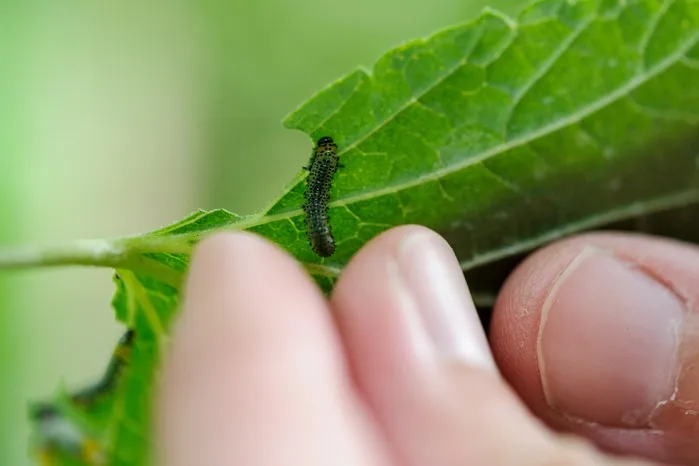
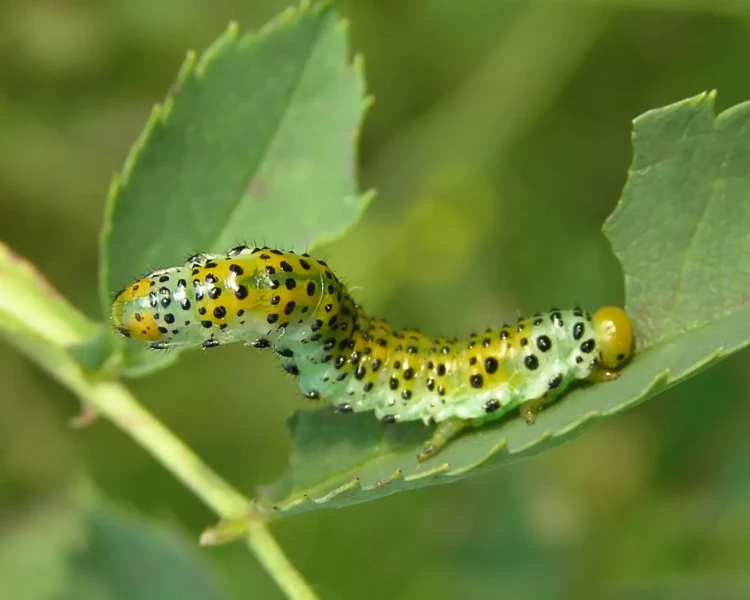
Once the eggs hatch, the confusion begins. Most people see the larvae and scream “caterpillar!” But here’s the deal: treating for caterpillars won’t work on sawflies. Products like Bacillus thuringiensis (Bt) are great for true caterpillars but are ineffective against sawflies.
Here’s how we tell them apart:
a) Prolegs (the fake legs on the abdomen)
- Caterpillar vs. sawfly larva: Sawflies have 6 or more pairs of prolegs. Caterpillars have 5 or fewer.
- Sawfly prolegs also lack tiny hooks called crochets; caterpillars have them.
b) Eyes
- Sawfly larvae have just one tiny pair of eyes.
- Caterpillars have 4 to 6 pairs on each side.
c) Behavior
- Sawfly larvae are often gregarious (they hang out in groups).
- When disturbed, they rear back in an S-shape or regurgitate a defensive liquid.
d) Head shape
-
Many sawfly larvae have a distinct yellow or black head that stands out.
Getting this right is essential for species identification and choosing the right control method.
Why Early Egg Identification Makes All the Difference
Spotting sawfly eggs isn’t just about being thorough; it’s about smarter pest management. When we catch the eggs before they hatch, we have options:
- Manual removal: Prune infested leaves or needles before larvae emerge.
- Horticultural oils: Smother eggs before they have a chance to develop.
- Biological control: Encourage predatory insects and beneficial insects like parasitic wasps that target sawfly eggs.
- Targeted treatments: Apply control measures only where needed, sparing the rest of your garden.
This approach supports sustainable practices and protects biodiversity’s impact on your yard. When we spray less and target better, we preserve ecosystem balance and allow plant health to thrive naturally. Bark damage from repeated infestations, leaf damage that weakens trees, and stress that opens the door to secondary pests—all of this can be avoided with a simple weekly check during egg development and early larval stages.
Your Quick Action Plan
Credit: agsci.colostate.edu
Here’s what we recommend every gardener do right now:
Go Outside and Inspect
Check the undersides of leaves, new stems, and tender growth. Look for raised bumps, slits, and yellow-white dots.
Know Your Host Plants
If you grow roses, pines, birches, or fruit trees, those are your priority checks.
Act Before Hatch
If you find sawfly eggs, remove the affected leaves or apply a dormant oil treatment immediately.
Ending Remarks
The bottom line? Stop looking at the damage and start looking for the source. Sawfly eggs are tiny, but once you know what to search for, they become hard to miss. A few minutes of pest control inspection each week can save you weeks of treatment later. We believe that smart pest management starts with understanding the full life cycle, from egg development through the larval stage and beyond. When you know what’s coming, you’re never caught off guard.
Happy scouting, and here’s to healthier plants!
FAQ’s
Sawfly eggs are tiny time bombs; catch them before they explode into a full-blown infestation.
What do sawfly eggs look like?
They are tiny, pale, and oval. On some plants, they look like small yellow dots or raised blisters on leaves or needles.
Where do sawflies lay eggs?
They usually lay eggs on young leaves, stems, needles, or leaf veins. Roses and pines are common host plants.
When do sawflies lay eggs?
Most lay eggs in spring and early summer. Some species lay later in the season and overwinter as eggs.
How many eggs does a sawfly have?
A female can lay 30 to 90 eggs at once, which is why infestations can build fast.
How do I stop sawfly eggs from hatching?
Check plants often, remove infested leaves, and use early treatment before the eggs hatch.