Hey there, fellow Floridian or soon-to-be one! I’ve spent enough time under the Florida sun to know — if you live here, you will meet a few spiders. Whether you’ve spotted a shiny web in your garden or stumbled upon a “weird orange spider Florida” moment on your porch, I’ve got you covered.
In this guide, I’ll walk you through the common Florida spiders — what they look like, where they love to hide, and how to deal with them without freaking out. I’ll also share when it’s time to call in a pro and when you can simply let nature do its thing.
So, grab your coffee and maybe keep your shoes handy, and let’s dive into the wild, webby world of spiders in Florida!
Why We’re Talking About Common Florida Spiders
If you live in Florida, chances are you’ve seen more than a few spiders around your home or yard. That’s no surprise — the state’s warm, humid climate is a paradise for them.
With over 250 types of spiders in Florida, you’ll find everything from tiny house spiders to bold jumpers and even a few venomous ones.
Here’s why understanding common Florida spiders matters:
- Florida’s weather helps them thrive — warm temperatures and high humidity keep spiders active all year.
- They’re nature’s pest control — most Florida spiders eat flies, mosquitoes, and roaches, helping you more than you think.
- A few are venomous — while most are harmless, species like the black widow and brown recluse deserve caution.
- They love homes and gardens — common spiders in Florida homes often hide in corners, garages, or near lights where insects gather.
Knowing your spiders helps you stay calm, stay safe, and decide when you might need a pro.
The Usual Suspects: House and Yard Spiders
Let’s meet the regulars! These are the common Florida spiders you’ll most often see hanging out in corners, porches, and gardens.
From tiny Florida house spiders spinning quiet webs indoors to bold jumping spiders exploring your patio, most are harmless roommates that help keep bugs in check. You’ll spot them year-round thanks to Florida’s warm weather — but don’t worry, knowing who’s who makes sharing your space a lot less creepy.
House Spiders in Florida
These are the ones you’ll likely encounter indoors — in corners, closets, and behind furniture.
Key examples and traits:
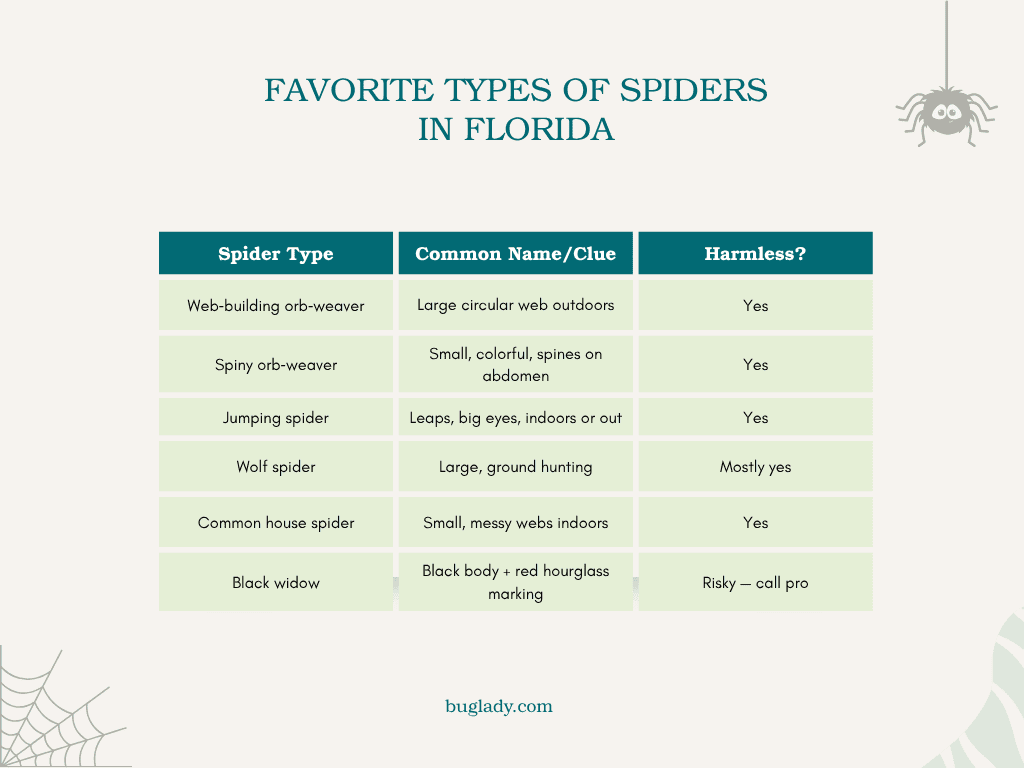
- Common house spider: Small, brownish or grey, and usually builds messy little webs in dark spots.
- Jumping spider: Compact body, big front eyes, and known for leaping. It is good at hunting insects.
- Cellar spider, also called daddy longlegs: Long thin legs, small body, and usually harmless indoors.
What to Do
- Keep clutter minimal under furniture and in closets because spiders love hiding in boxes.
- Seal cracks and gaps around windows and doors to reduce entry.
- If you spot them and don’t want them inside, you can gently relocate them outdoors since they are generally harmless.
Garden and Outdoor Web Builders
When you’re outside, you’ll see spiders that build webs between shrubs, across porches, and around lights.
Here are some prominent ones:
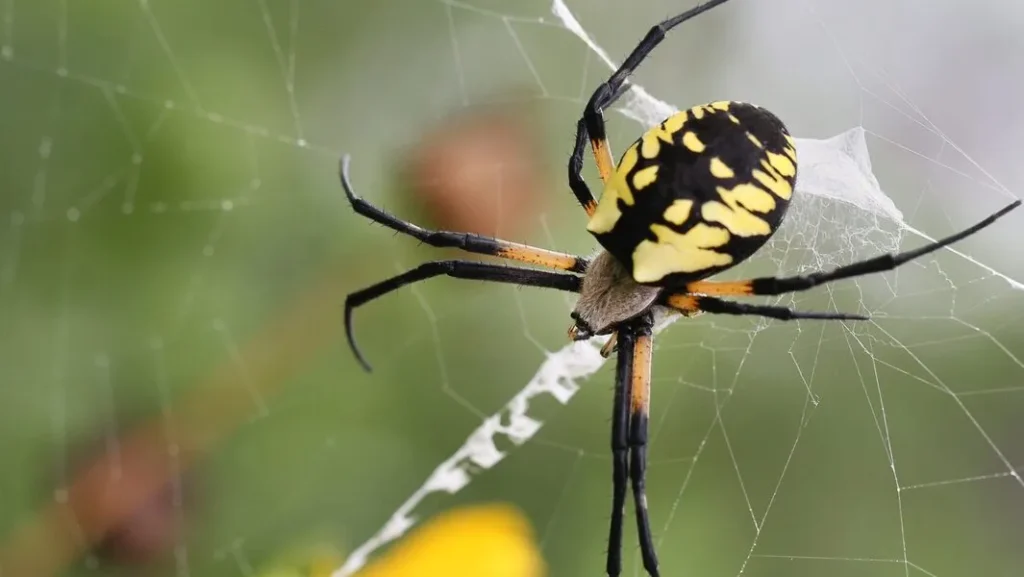
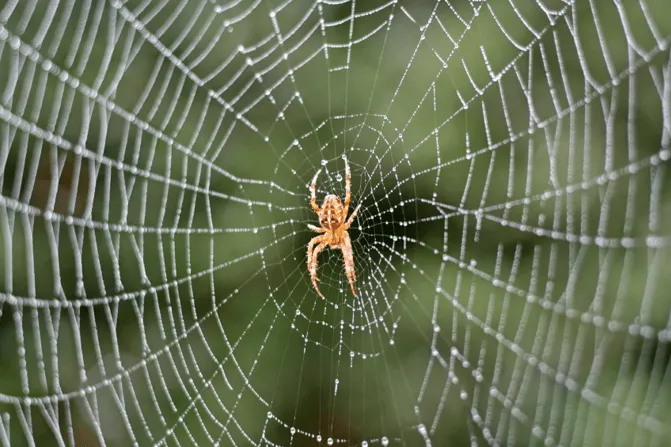
- Orb-weavers: These spin big circular webs. One common type is the golden silk orb-weaver, sometimes described as an orange spider in Florida.
- Spiny orb-weaver: Small but colorful, with spiny protrusions on its abdomen. It is harmless to humans.
- Wolf spiders: These do not build webs. They hunt on the ground. Their size and quick movement may spook you, but they are mostly harmless.
Good to know: These spiders are part of the ecosystem. They help control pests like mosquitoes and flies. So if they’re outside and not bothering you, they’re doing a service.
The Ones to Know: Bigger, Bold, or Potentially Risky
Let us now look at some of the risky ones.
Largest Florida Spiders and Standout Species
Some spiders just grab attention because they’re large or vividly colored.
- Golden silk orb-weaver, sometimes called banana spider: Big size, golden web, and occasional orange hue.
- Florida wolf spider: A large ground-dwelling spider found in parts of Florida.
Even though they may look scary, many of these largest Florida spiders are not dangerous to humans.
Venomous Spiders in Florida
Yes, they’re rare — but worth your attention so you can identify and avoid trouble.
- Black widow spiders (genus Latrodectus): Recognizable by a shiny black body and red or orange hourglass marking underneath. They are often found in hidden spots like woodpiles, garages, and under benches.
- Brown recluse spider (
Loxosceles reclusa): Much rarer in Florida than some people think. It is known for a violin-shaped mark on its back and six eyes, while most spiders have eight.
Important: If you suspect one of these in your home, don’t try to handle it yourself. Instead, consider calling professional help.
Spotting, Identifying, and Understanding Common Spiders in Florida Homes
Whether it’s a “red spider Florida” mention or a “spider in nest” on the porch, here are tips to help you feel more confident.
Checklist for Spider Identification
- Size and body shape, such as compact vs. long legs or hairy vs. smooth
- Color and distinctive markings, such as hourglass, violin shape, or stripes
- Web type or hunting method, such as orb web vs. ground hunter
- Location, such as indoors vs. outdoors or high vs. ground level
- Behavior, such as running, jumping, building, or hiding
For example, if you see a brightly colored spider spinning a large vertical web between bushes, it’s likely an orb-weaver and not something to panic about. If it’s a shiny black spider with an hourglass mark under its belly and it’s in a woodpile, now you might pay more attention.
How to Prevent and Manage Spider Pests
If you’re thinking about spider pest control costs, prevention helps keep things inexpensive. Professional removal or control may cost more depending on severity, species, and home size.
Preventive Strategies
- Seal entry points: Check window screens, door sweeps, and foundation cracks.
- Reduce clutter inside and outside: Boxes, debris, and wood piles can become spider hideouts.
- Manage moisture: Spiders like humid, dark spots. Use dehumidifiers and ventilate attics or crawl spaces.
- Adjust outdoor lighting: Bright white lights attract insects, which attract spiders. Consider yellow or sodium-vapor lights.
- Professional training and help: If you want to level up your knowledge, consider classes like those offered by BugLady Pest Management Training. These can help you identify and manage pests, including spiders.
In many cases, a routine inspection and exclusion job will cost much less than dealing with an infestation or a harmful bite.
When to Call in the Professionals
Here are clear scenarios when DIY may not cut it:
- You identify a venomous spider in Florida, such as a black widow or recluse, in your home.
- You find a nest or web of spiders in hidden spaces and suspect many are living inside, such as in an attic or crawl space.
- You’re repeatedly seeing spiders despite doing the preventive work, which may indicate a bigger entry or habitat issue.
- You’d like formal training or want to set up a monitoring program.
Professional services can also help with species identification, which is crucial for genuine risk and cost-effective exclusion.
Why Understanding Florida Spiders Identification Matters
- It helps you decide when a spider is no big deal vs. when you should be cautious.
- It prevents unnecessary fear because many scary-looking spiders are harmless.
- It helps you protect your home, family, and pets from potential bites.
- It supports you in taking the right management path, whether DIY or professional.
If you want to get even better at identifying or managing them, check out Bug Lady’s Pest Control Classes — they’re great for learning pest ID and prevention the easy way.
Frequently Asked Questions
What are the most common spiders in Florida homes?
The most common spiders in Florida homes include common house spiders, jumping spiders, cellar spiders, wolf spiders, and orb-weavers. Most are harmless and help control insects, but it is still smart to identify them correctly before handling or removing them.
Are Florida house spiders dangerous?
Most Florida house spiders are not dangerous to people. They usually avoid humans and feed on insects. However, venomous spiders like black widows and brown recluse spiders require extra caution and should not be handled directly.
What is the most venomous spider in Florida?
Black widow spiders are among the most venomous spiders found in Florida. They are known for their shiny black body and red or orange hourglass marking. If you suspect a black widow is in your home, contact a pest control professional for safe removal.
How do I keep spiders out of my house in Florida?
To keep spiders out of your house in Florida, seal cracks and gaps, reduce clutter, vacuum corners regularly, repair window screens, manage moisture, and limit outdoor lighting that attracts insects. Since spiders follow food sources, reducing bugs around your home also helps reduce spiders.
When should I call pest control for spiders?
You should call pest control for spiders if you see venomous spiders, keep finding webs or nests, notice repeated spider activity indoors, or are unsure what type of spider you have. A professional can identify the species and recommend safe treatment or exclusion methods.
The Bottom Line
Yes, spiders are all around us in Florida — but the phrase common Florida spiders doesn’t need to scare you. Most of them are harmless, even helpful. The key is knowing which ones are in your house or yard, how to spot them, and how to respond.
If you’re curious or frustrated by frequent sightings, the training offered by BugLady is a great resource to up your game.
You can live comfortably in Florida while coexisting with nature’s eight-legged pest controllers — just stay alert, keep your space tidy, and don’t hesitate to call a pro if something doesn’t look right.