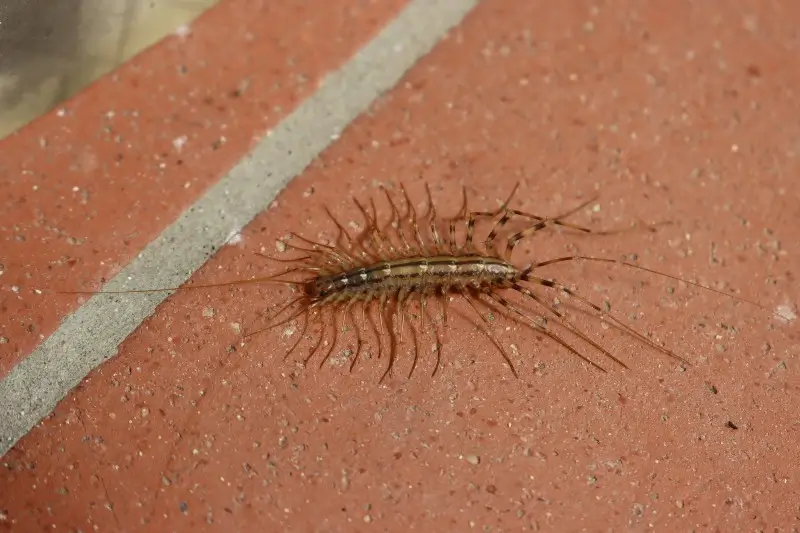
You switch on the bathroom light. A long, fast creature races behind the cabinet. Your first thought may be, “Why are there little brown centipedes in my house?” One sighting does not always mean an infestation. Still, it tells you something about your home.
A brown centipede usually enters for three reasons: moisture, shelter, and food. It may follow a leak, hide in clutter, or hunt pests you have not noticed yet. Let’s decode the message before more legs join the party.
What Does a Brown Centipede in the House Mean?
Think of a centipede as a tiny pest detective. It goes where conditions help it survive.
a) Your Home May Have Too Much Moisture
Centipedes prefer cool, damp spaces. People often find them in basements, crawl spaces, laundry rooms, and bathrooms.
A brown centipede in a bathroom may point to condensation, weak airflow, a dripping pipe, or water under a sink. A basement sighting may suggest humidity or seepage.
Check these moisture hot spots:
- Leaking faucets and supply lines
- Damp sink cabinets
- Wet basement walls
- Slow drains
- Poor bathroom ventilation
- Air-conditioning condensation
- Mulch touching the foundation
b) Other Pests May Be Serving Dinner
Centipedes hunt living prey. They may eat ants, cockroaches, silverfish, crickets, termites, moths, and spiders.
That means a sighting can reveal a hidden food source. The centipede is not chewing your wood or raiding your pantry. It is chasing the pests that might.
Do house centipedes kill brown recluse spiders? They can catch small spiders. However, you should never use centipedes as a spider-control plan. Identify and treat the wider pest problem instead.
c) Your Home Has an Open Entry Route
Centipedes squeeze through narrow gaps around doors, windows, pipes, vents, drains, siding, and foundations.
You may notice one after heavy rain, extreme heat, drought, or landscaping work. It often moves from outdoor shelter into a more comfortable indoor space.
Brown Centipede Identification: What Are You Seeing?
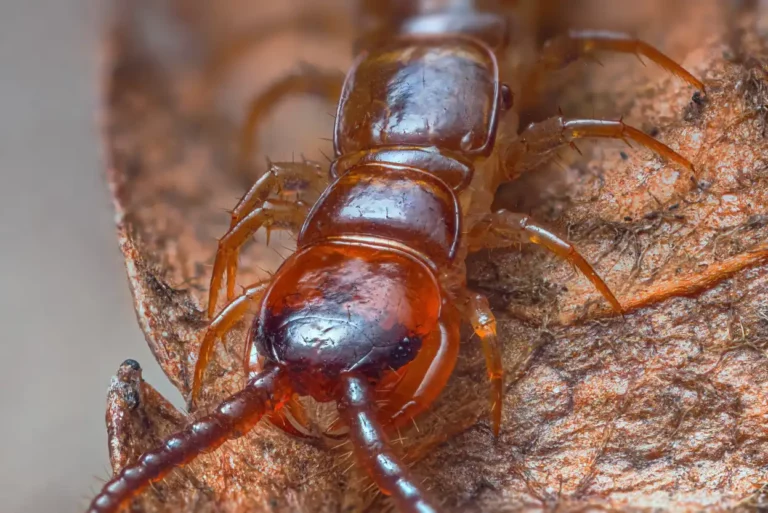
Credit: ondemandpestcontrol.com
Color alone cannot confirm a species. Many centipedes look tan, reddish, chestnut, gray-brown, or dark brown.
Use this simple brown centipede identification checklist:
- Body: Flat and segmented
- Legs: One pair per body segment
- Movement: Fast and active
- Antennae: Long and visible
- Behavior: Runs when exposed
- Habitat: Dark, damp, sheltered areas
A brown centipede-looking bug in the house may actually be a millipede or beetle larva. Millipedes usually have rounder bodies, shorter legs, and slower movement. They often curl into a coil when disturbed.
Brown Centipede vs. House Centipede Difference
“Brown centipede” describes color. It does not name one exact species.
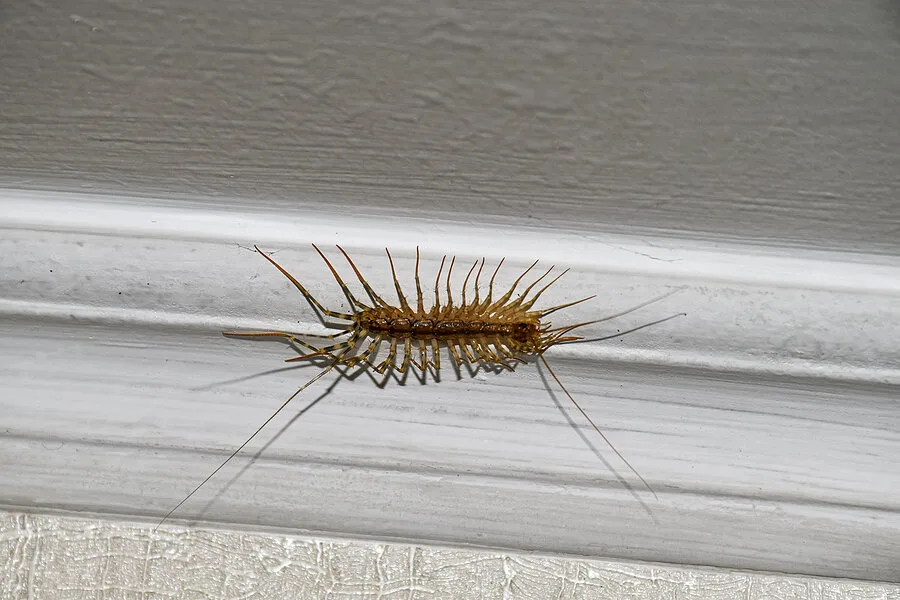
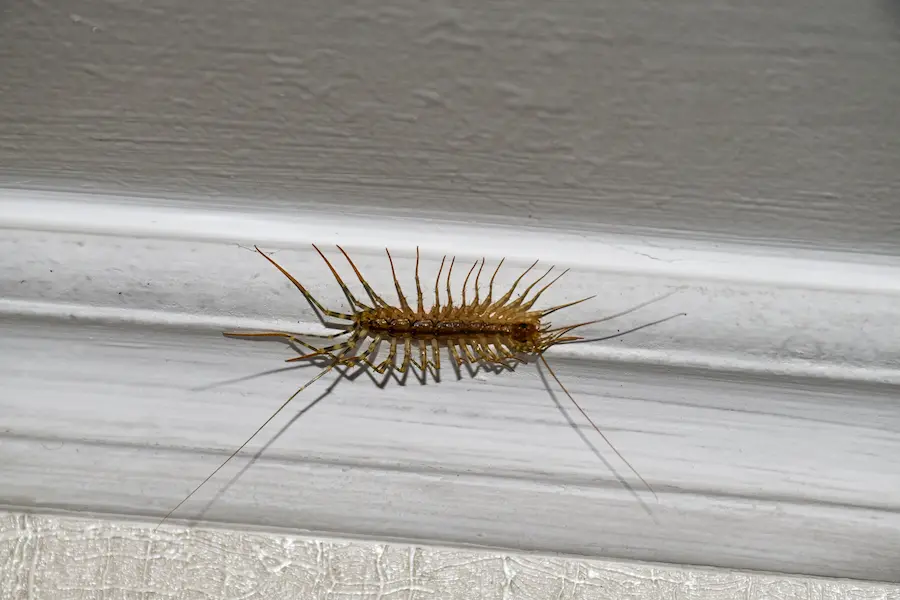
A brown house centipede has a tan, grayish, or brown body with very long, delicate legs. Its rear legs may look like extra antennae. It also moves at impressive speed. Other types have shorter, stronger legs and thicker bodies. These may be stone centipedes, soil centipedes, or larger outdoor species.
Here is the quick brown centipede vs. house centipede difference:
- House centipede: Long, thin legs and a lightweight look
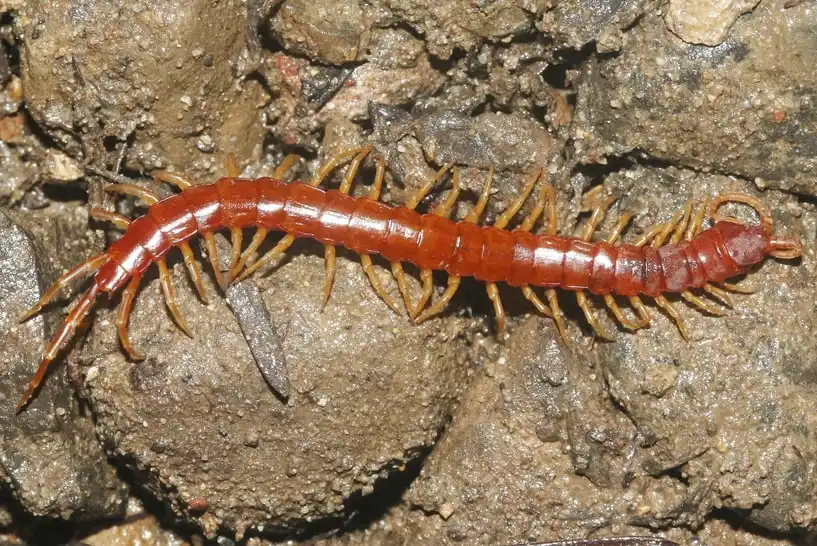
- Brown garden centipede: Shorter legs and a sturdier body
- Soil centipede: Thin body with many short legs
- Large Scolopendra type: Heavy body, strong legs, and a clear head
A soil centipede brown species often hides in loose soil. Garden types stay under stones, logs, mulch, pots, and leaf litter.
Common Brown Centipede Species in the USA
Credit: greenpestmgmt.com
The brown centipede habitat in the United States changes by region. Moisture, soil, temperature, and shelter shape where each group lives.
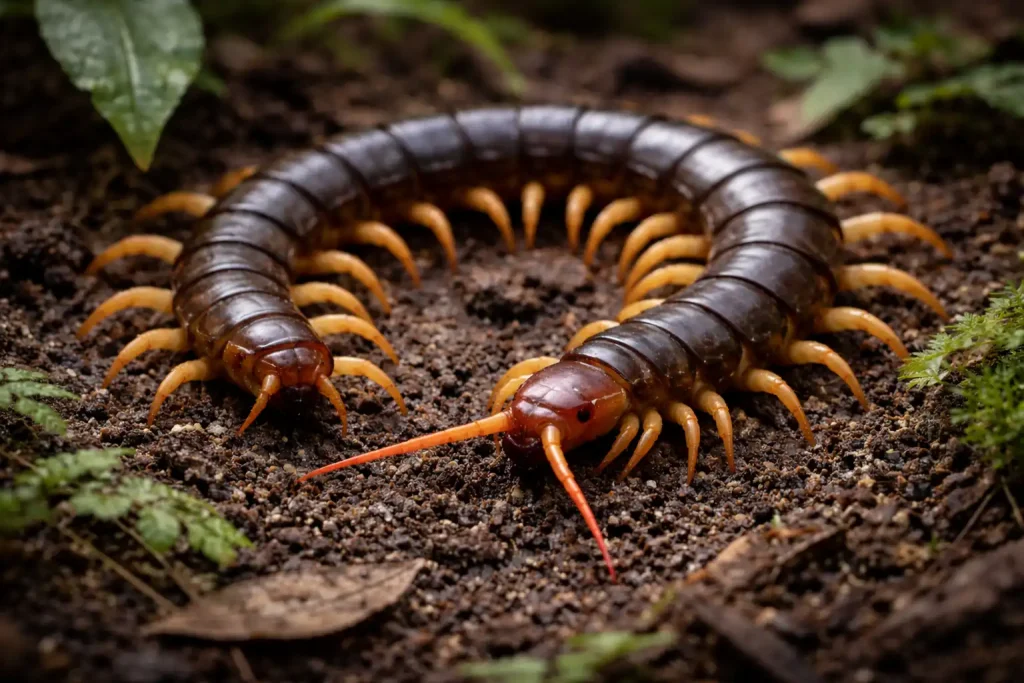
Common brown centipede species in the USA include:
- House centipedes
- Stone centipedes
- Soil centipedes
- Bark centipedes
- Desert centipedes
The Scolopendra polymorpha brown centipede is also called the tiger centipede or the common desert centipede. It belongs mainly to western and southwestern areas. Its colors may include brown, tan, orange, or dark bands.
For a brown centipede Florida sighting, focus on body shape, leg length, size, and location. Florida’s warmth, humidity, mulch, and dense landscaping create excellent shelter for many arthropods.
A clear photo offers better clues than color alone.
Baby Brown Centipede or Small Adult?
A baby brown centipede may resemble a miniature adult. Depending on its group, it may gain body segments and leg pairs as it grows. Brown centipede size varies widely.
Some soil types stay tiny and threadlike. House centipedes look larger because their legs spread outward. Large Scolopendra species can reach several inches. So, a tiny brown centipede in the house may not be a baby. It may be a naturally small species that slipped through a gap.
Is a Brown Centipede Poisonous?
Credit: a-1pc.com
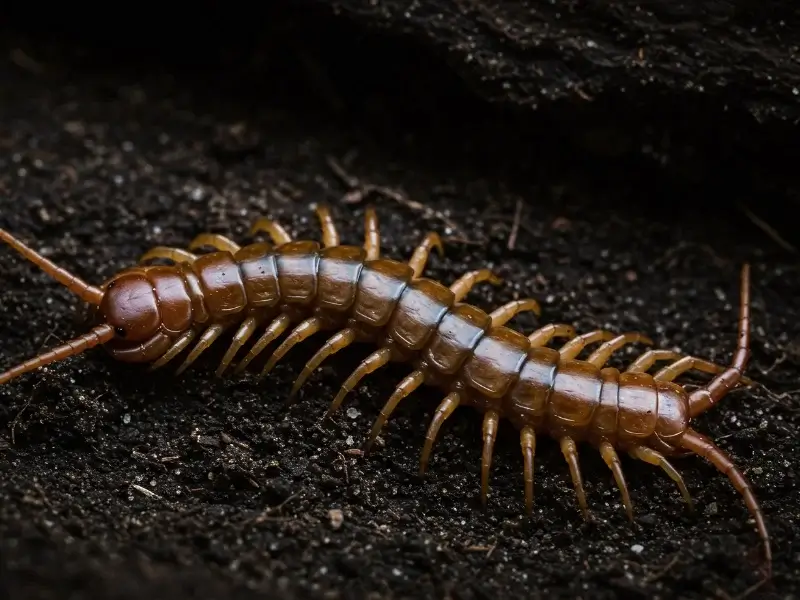
Centipedes are venomous, not poisonous. They use modified front legs to inject venom into prey.
So, is a brown centipede poisonous? Not in the technical sense. Poison causes harm when touched or swallowed. Venom enters through a bite or sting-like action.
But are brown centipedes dangerous to people?
Most small indoor species avoid humans. Bites are uncommon. They usually happen when someone handles the animal or crushes it against the skin.
Possible brown centipede bite symptoms include:
- Sharp or burning pain
- Redness
- Mild swelling
- Tenderness
- Itching or irritation
Wash the area with soap and water. Apply a cool compress. Seek medical help for severe pain, spreading swelling, breathing trouble, dizziness, vomiting, or signs of an allergic reaction.
Never pick up an unknown centipede with bare hands.
Why Are They in the Bathroom, Basement, or Yard?
The location of the sighting can reveal the cause.
In the Bathroom
Look for humidity, leaks, silverfish, drain flies, and cockroaches.
Run the exhaust fan. Dry wet surfaces. Repair dripping fixtures. Seal gaps around pipes.
In the Basement
A brown centipede in the basement may point to humidity, foundation cracks, clutter, or insect activity.
Use a dehumidifier when needed. Keep storage containers off the floor. Inspect utility openings and basement windows.
In the Yard
A brown centipede in the yard is usually doing normal predator work. Look for wet mulch, leaf piles, stones, wood, planters, and landscape edging. Outdoor sightings rarely require immediate treatment.
The problem starts when outdoor shelter sits directly beside your foundation.
How to Get Rid of Brown Centipedes in the House
Credit: activepestcontrol.com
Killing one visible crawler will not fix a leak or remove its prey. Use this practical plan for effective brown centipede removal.
a) Remove the One You See
Vacuum it or trap it under a container. Avoid direct handling.
Dispose of the vacuum contents promptly if the centipede remains alive.
b) Dry the Damp Zones
Repair plumbing leaks. Improve bathroom ventilation. Clear blocked gutters.
Use a dehumidifier in basements and crawl spaces. Direct downspouts away from the foundation.
c) Cut Off the Food Supply
Check for ants, roaches, silverfish, termites, spiders, and other insects.
Centipede activity may continue until you control the prey attracting them to you.
d) Seal the Route Inside
Close cracks around:
- Doors
- Windows
- Pipes
- Cables
- Vents
- Siding
- Foundations
Replace torn screens and worn weather stripping.
e) Reduce Hiding Places
Move firewood away from the house. Thin heavy mulch. Remove wet leaves.
Store basement belongings in sealed plastic containers instead of cardboard boxes.
f) Monitor the Activity
Place sticky monitors along walls, behind appliances, under sinks, and near basement corners.
These traps can reveal where centipedes and their prey are most active.
g) Bring in an Expert
Repeated sightings deserve an inspection. So do large specimens, bites, or activity in several rooms.
Effective control should target moisture, entry points, outdoor shelter, and pest prey. It should not focus only on the crawler you happened to see.
Brown Centipede Control Methods That Last
The best brown centipede control methods work as one connected system:
- Identify the pest.
- Find moisture and prey.
- Block entry points.
- Reduce outdoor shelter.
- Use targeted treatment where needed.
- Monitor for new activity.
I prefer root-cause control over random spraying. It is cleaner, smarter, and more likely to stop the next surprise sprint across your floor.
FAQ’s
Let’s quickly answer the questions homeowners ask most about brown centipedes.
What attracts centipedes indoors?
Moisture, shelter, open entry gaps, and insect prey attract them.
Can centipedes damage a house?
No. They do not eat wood, fabric, furniture, or stored food.
Should I kill a house centipede?
You can remove it, but you should also check for leaks and other pests.
How do I prevent centipedes naturally?
Dry damp areas, seal cracks, reduce clutter, and move mulch away from the foundation.
When should I call pest control?
Call when sightings repeat, several rooms show activity, or DIY steps fail.
The Bottom Line
One centipede pest control is not a supernatural warning. It is an environmental clue. Your home may offer damp air. It may shelter insects. It may have an open foundation gap. Fix those three conditions, and you remove the welcome mat.
When sightings continue, stop playing “catch the crawler.” Let Bug Lady identify the pest and build a focused plan that protects your home.