Here’s a fact most people don’t know: spider species are among the most efficient predators on the planet. They eat more insects globally than any other animal. But the real magic isn’t in their numbers; it’s in their methods. From web-building house spiders to hunting wolf spiders, each type of spider has evolved a unique way to catch and consume its prey. If you’ve ever wondered what do spiders eat or how they manage to do it with no hands, you’re about to get some answers that’ll make you see these eight-legged creatures in a whole new light.
The Short Answer: Spiders Are Carnivores
Spiders are predators. Almost every single spider species on earth is a carnivore. Their diet is mostly made up of live insects and other small creatures. They don’t graze, they hunt. And they are remarkably good at it.
A Lund University study found something wild. Spiders collectively eat 400 to 800 million metric tons of insects per year. For context? Humans eat about 400 million tons of meat and fish annually. Spiders are out here matching us, and they don’t even have refrigerators.
What Do Spiders Eat Most Commonly?
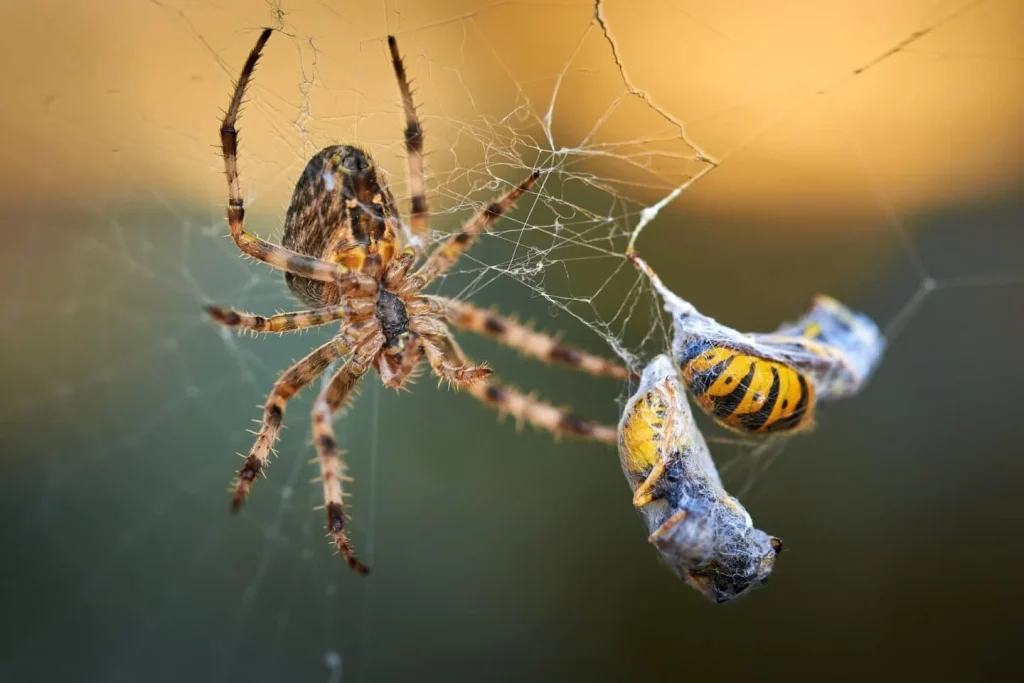
Credit: cascadepest.com
Let’s get specific. Here’s what spiders eat most often:
- Flies — one of the most common meals, with a spider eating a fly being a frequent sight
- Mosquitoes — yes, your house spider is doing pest control
- Moths — especially caught in outdoor webs
- Cockroaches — a spider eating a cockroach is a natural form of pest management
- Ants — small but abundant
- Earwigs — a common prey in homes
- Beetles — especially smaller varieties
- Fleas — yes, fleas
- Silverfish — another indoor pest on the menu
- Gnats — tiny, but spiders don’t mind
- Aphids — important for garden spider species
- Crickets — especially for jumping spider species
- Other spiders — yep, black widows eat other spiders too
That last one surprises people. Spiders are cannibalistic. If a smaller type of spider wanders into a bigger one’s territory, it becomes dinner. No negotiations.
How Do Spiders Actually Eat?
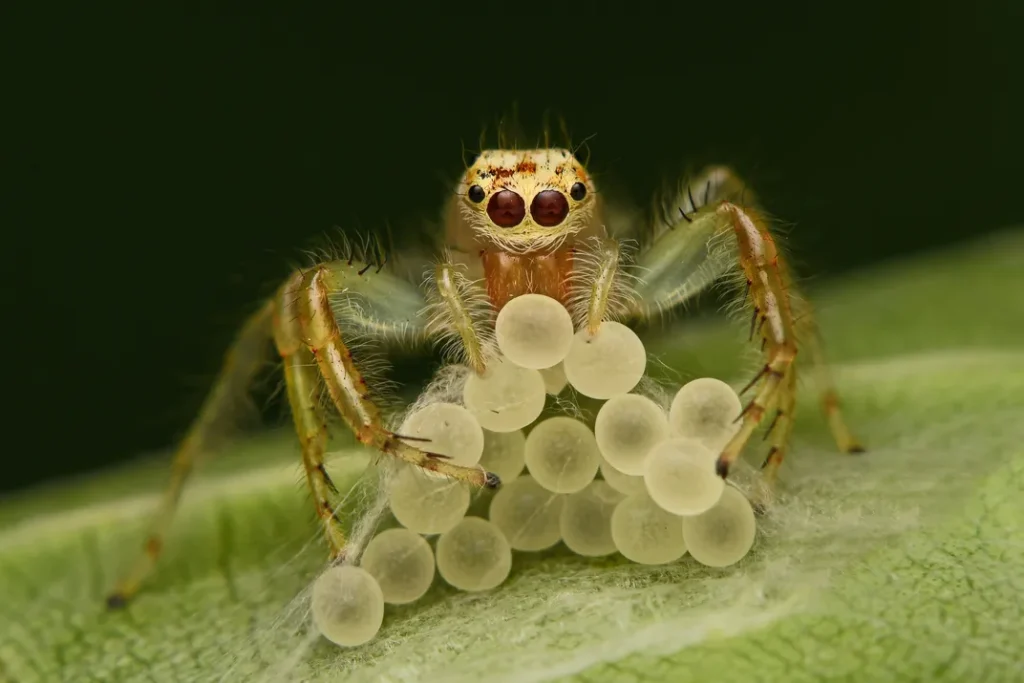
Credit: photocontest.smithsonianmag.com
This part is wild, so stay with me. Spiders don’t have teeth. They can’t chew the way we do. Instead, they have chelicerae, sharp, pointed appendages that act like fangs.
Here’s how the whole spider-eating process works:
- The type of spider captures its prey.
- It uses chelicerae to grip the prey tightly.
- It injects venom into the prey.
- That venom breaks the prey’s insides into liquid.
- The spider then sucks up the liquefied meal.
Think of it like a living juice box. Gross? A little. Effective? Absolutely.
Spiders are built for this. Between their eight legs and those fangs, they’re perfectly designed predators. Want to understand the full anatomy? Read our guide on how many legs a spider has.
And do you know that sometimes spiders also vomit digestive fluids onto their prey first? Then they chew and suck everything up. They leave behind the hard stuff: wings, legs, exoskeletons. That’s why you sometimes find those tiny hollow husks near a spider-eating insect scene.
How Do Spiders Hunt and Catch Their Food?
Not all spider species hunt the same way. There are two main camps.
The Web Builders: Passive Hunters
These spiders spin silk webs and wait. Flies or mosquitoes hit the sticky threads and get trapped. The spider senses the vibration. Then it moves in fast.
Web types vary — orb webs, cobwebs, funnel webs, tangle webs. Each design works differently. But the goal is the same: trap something and eat it.
Black widow spiders and house spiders spin messy cobwebs in dark corners. Orb weavers spin those beautiful round webs you see in gardens. Outdoor web spiders often set up near lights. Why? Because lights attract insects. Smart placement.
The Active Hunters: Stealth Mode
These spider species don’t wait. They go looking. Wolf spiders chase down prey on foot. Jumping spiders stalk their target like a tiny leopard. Crab spiders camouflage themselves and ambush prey that comes close. Some spiders even mimic other insects to get close without being detected.
The majority of spider species detect prey through vibration, scent, and sound — not just sight. Some species can see prey coming from a distance, though.
Wait, Do Spiders Eat Plants Too?
Credit: livescience.com
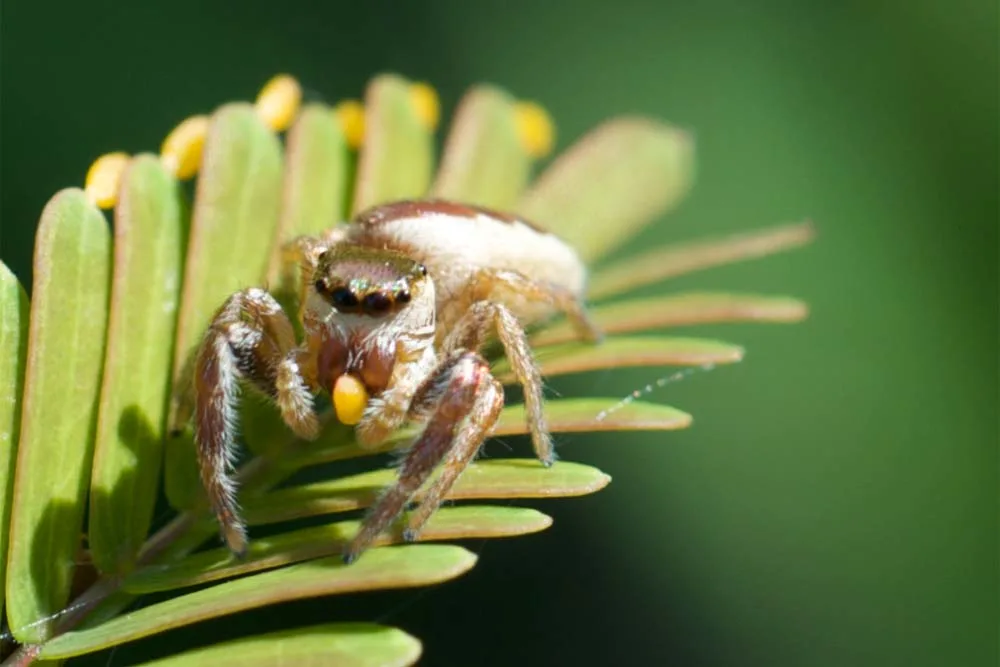
Here’s something most people don’t know. Some spider species eat plants. Not all. Not most. But it happens more than scientists originally thought.
Researchers found evidence of plant-eating in over 60 spider species across 10 different families.
The menu includes:
- Nectar
- Plant sap
- Pollen
- Honeydew
- Leaf tissue
- Seeds
One type of spider, Bagheera kiplingi, a jumping spider from Mexico, is nearly fully vegetarian. It survives mostly on bits of acacia plants. It’s the only spider species known to be almost completely plant-based.
Other spider species eat pollen accidentally. They recycle their old webs by eating them. And those webs often have pollen caught in the silk.
What Do House Spiders Specifically Eat?
Credit: treehugger.com
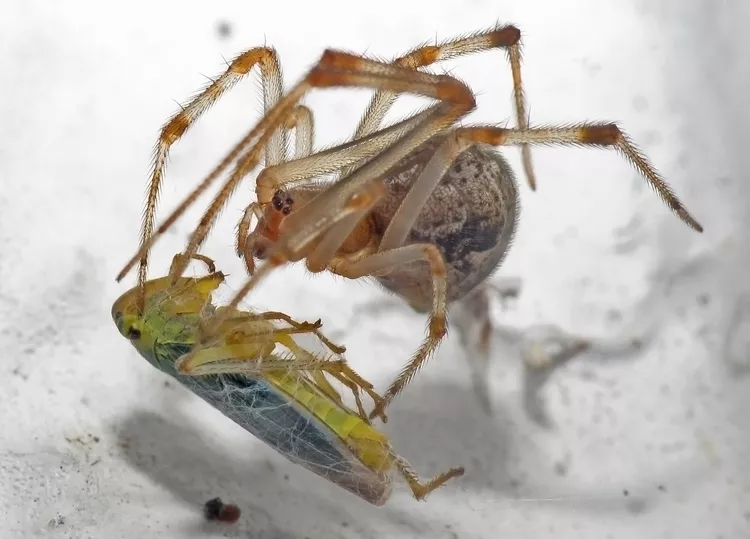
If you’ve got house spiders inside your home, they’re eating your household pests. That’s basically their job description.
Common house spiders prefer:
- Flies
- Mosquitoes
- Moths
- Cockroaches
- Earwigs
- Gnats
- Silverfish
House spiders have actually evolved to live indoors full-time. They thrive in dark, quiet spaces; basements, garages, behind furniture. They set up webs in corners where insects are likely to pass through.
Here’s the key insight: if you have spiders, you have an insect problem first. House spiders follow the food. No insects, no spiders. It’s that simple.
What Do Larger Spiders Eat?
Bigger spider species have a much more dramatic menu. We’re talking beyond insects here. Large exotic spider species have been documented eating:
- Frogs
- Lizards
- Small birds
- Bats
- Worms
- Snails
- Small rodents
Goliath birdeaters, the world’s largest type of spider, can take down small vertebrates. Some fishing spiders actually catch and eat fish. If you’re squeamish, those are not the spider species you want in your yard.
What Does the Black Widow Spider Eat?
Credit: phys.org
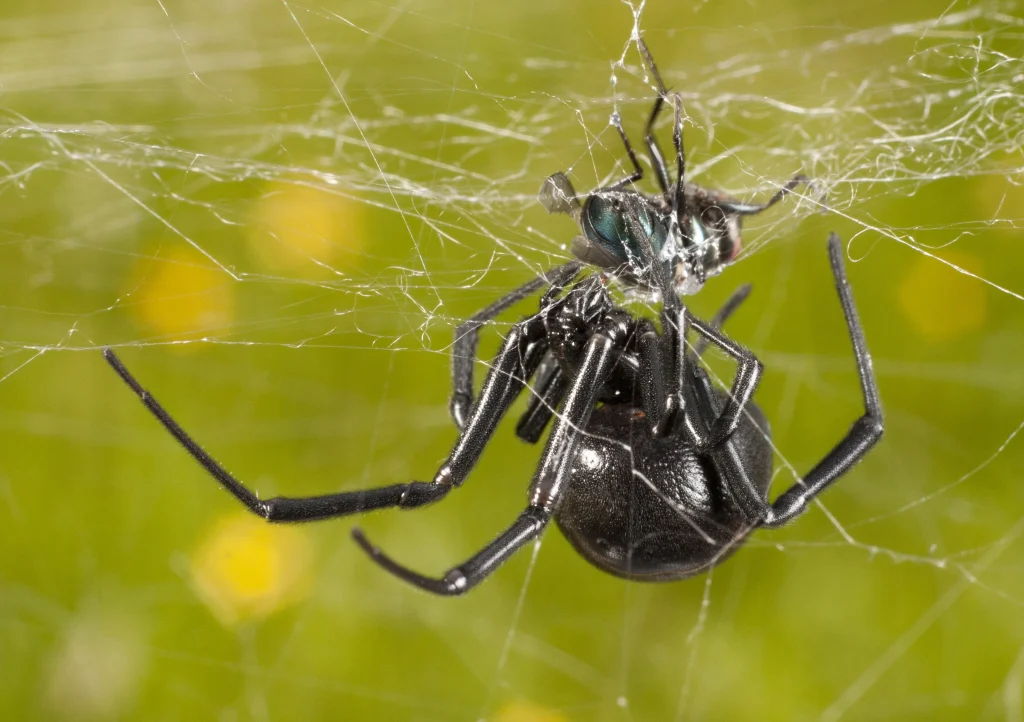
The black widow spider is a classic example of a type of spider that thrives on a diet of insects and other arachnids.
Black widows eat a variety of prey, including the following:
- Flies
- Mosquitoes
- Beetles
- Cockroaches
- Other spider species
Black widows eat their prey by trapping it in their irregular, messy webs. Once caught, they inject venom to liquefy the insides and then suck up the nutrients. They’re also known to eat their mates after mating, which is where their infamous reputation comes from.
What Do Jumping Spiders Eat?
Jumping spiders are active hunters. Unlike web-building spider species, they rely on their excellent vision and agility to stalk and pounce on their prey.
So, what do jumping spiders eat? Their diet typically includes:
- Flies
- Moths
- Beetles
- Aphids
- Other small insects
Some jumping spider species have even been observed eating plant-based foods like nectar and pollen, making them one of the few spider species with a slightly more varied diet. If you’re curious about the spiders you’re most likely to run into nearby, check out our guide to common Florida spiders.
How Long Can a Spider Go Without Eating?
Credit: drkilligans.com
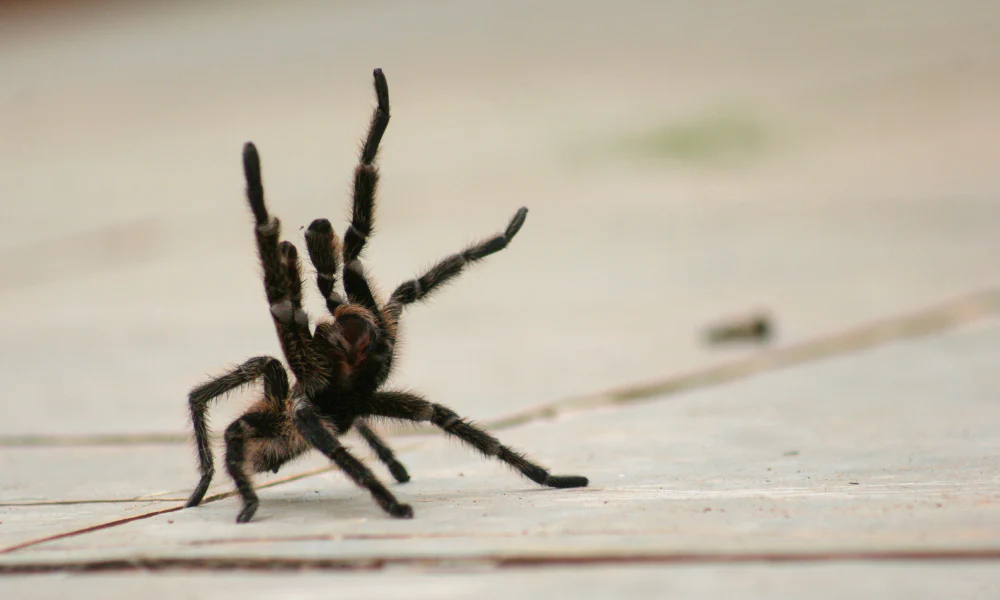
Spiders are incredibly efficient. They don’t need to eat daily. Some spider species can go weeks without eating. Crab spiders, for example, can wait days or even weeks. How long can a spider go without eating? Weeks, sometimes even months, depending on the type of spider and its size.
That said, when food is available, spider-eating occurs frequently. They can eat up to 4 times a day when prey is abundant. A single house spider eats up to 2,000 insects per year on average.
Spiders also need access to water. They get most of their moisture from their prey. But they’ll also drink directly from water sources. If insects are scarce, access to water becomes even more critical for their survival.
Why This Matters for You at Home
Here’s the practical part. Understanding what spiders eat helps you control them naturally.
House spiders don’t come into your home for fun. They come because your home has insects. Fix the insect problem, and the house spider problem follows.
Here’s what actually works:
- Seal entry points — cracks, gaps around windows and doors
- Switch outdoor lights — bright white bulbs attract insects; yellow bug lights don’t
- Reduce clutter — insects breed and hide in clutter; so do spider species
- Clean up food scraps — don’t attract insects that attract house spiders
- Fix moisture issues — bugs love damp areas; spider species love bugs
- Vacuum regularly — pick up insects and spider webs before they become a problem
- Use sticky traps — great for catching insects and wandering spider species alike
Cut off the food supply, and house spiders will look elsewhere. It’s the most effective long-term strategy.
Final Words
Spider species are fascinating, and honestly, pretty useful. They eat the bugs you can’t stand: mosquitoes, flies, and cockroaches. They’ve been doing it for millions of years, and they don’t need much.
And if you want fewer house spiders inside your home, the answer isn’t always a shoe. It’s eliminating what they’re coming for in the first place.
For stubborn infestations, a professional spider pest exterminator can safely identify entry points, remove existing spiders, and implement long-term prevention strategies so you can enjoy a spider-free home without the hassle.
Frequently Asked Questions
Here’s a quick roundup of questions we get asked about spiders’ diet.
What do spiders eat most often?
Most spider species, including house spiders, eat insects like flies, mosquitoes, moths, ants, and cockroaches. These make up the bulk of their diet in the wild and at home.
Do spiders eat plants?
Some spider species do. Over 60 spider species have been found eating plant material like nectar, pollen, and plant sap. The jumping spider Bagheera kiplingi is nearly fully vegetarian.
How long can a spider go without eating?
Most spider species can survive several weeks without food. Some, like crab spiders, can wait days or even weeks patiently between meals. So, how long can a spider go without eating? It depends on the type of spider, but weeks to months is common.
Do spiders eat other spiders?
Yes, many spider species are cannibalistic. Black widows eat other spiders, and larger spider species will eat smaller ones if the opportunity presents itself.
What does the black widow spider eat?
The black widow spider primarily eats insects like flies, mosquitoes, beetles, and cockroaches. They are also known to eat other spider species, including their own mates.