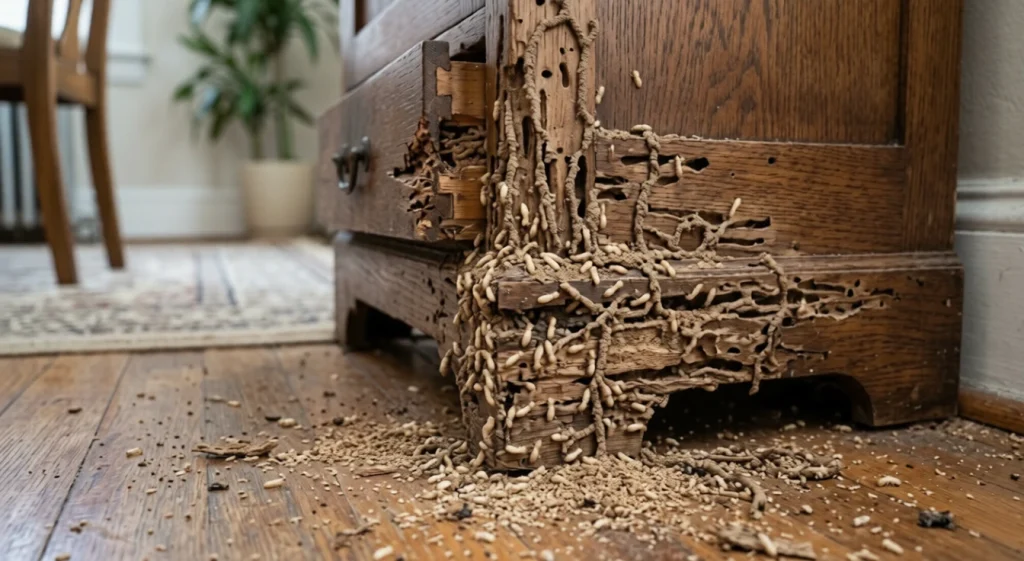
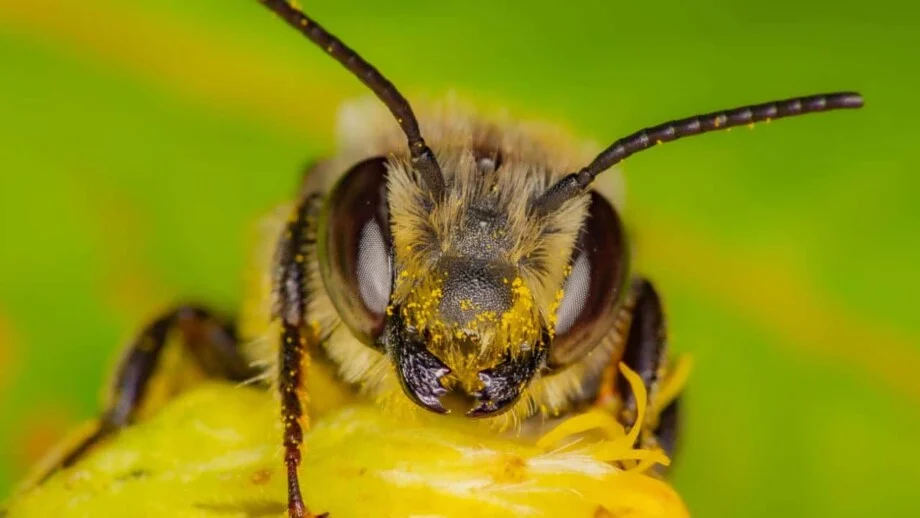
You bought a beautiful wooden dresser five years ago. It looks fine on the outside. But one day, you press your hand against it, and your fingers go right through. That’s termites. And the scary part? They were probably there for years before you noticed. Termites are silent. They work from the inside out. By the time you see the damage, they’ve already eaten through the structure. Most homeowners don’t catch it early enough. And that’s exactly what we’re going to fix today. In this guide, you’ll learn how to spot termite damage in furniture early, understand what’s attracting them, and know exactly what to do when you find it.
Why Termites Target Wood Furniture
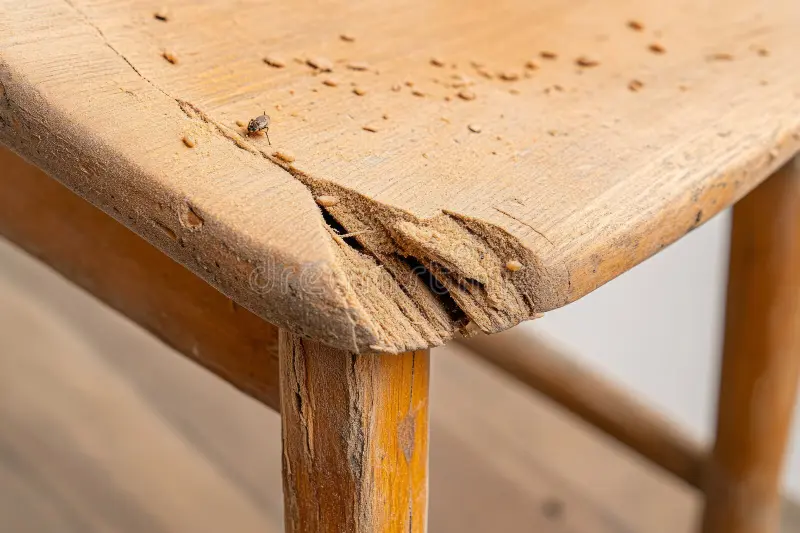
Credit: dreamstime.com
Let’s start with the basics. Why wooden furniture?
Termites eat cellulose, the main building block of wood. Your sofa frame, dining table, bookshelf, and bed frame are all part of an all-you-can-eat buffet. Wood furniture is one of the most common food sources termites exploit inside a home.
But not all pieces of furniture are equally at risk. Here’s what makes certain ones more vulnerable:
Moisture is the big one. Termites, especially subterranean termites, are drawn to damp wood. A piece of furniture sitting against a leaky wall? Perfect conditions.
Location matters. Furniture touching the floor directly is easier to access. Termites travel through the soil and up into wood. The less distance they have to cover, the better for them.
Old or untreated wood is easier to penetrate. Hardwood furniture with factory sealants is harder to get into. Older pieces, unfinished wood, or furniture that’s been wet and dried out repeatedly? Much easier targets.
Darkness and stillness. Termites hate light. Furniture in dark corners, under beds, or inside storage rooms is prime real estate. They can eat for years without being disturbed.
The Types of Termites That Damage Furniture
Credit: 1st-choice.com.sg
Not all termites behave the same way. Knowing the species of termites you’re dealing with changes how you respond.
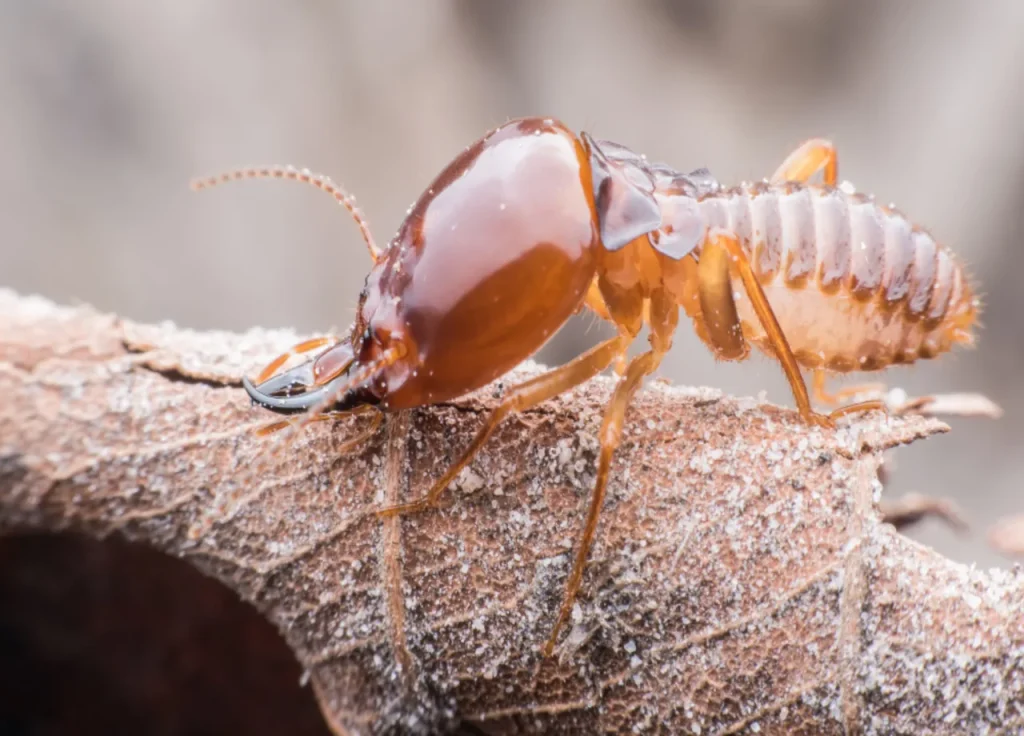
Drywood termites are the most common culprits for termite damage on furniture. They live entirely inside the wood, no soil contact needed. They’re harder to detect because they don’t leave mud tubes. Instead, they leave behind frass (droppings) and tiny exit holes. A drywood termite colony grows slowly, but the damage compounds over the years.
Subterranean termites nest underground and travel up through the soil. They’re responsible for the majority of structural damage to homes in the US. They can absolutely infest wooden furniture, especially pieces on or near the floor, but they need moisture and soil access to thrive. Formosan termites are a particularly aggressive subterranean species. They infest in massive numbers and can cause severe wood damage in a fraction of the time other species take.
Dampwood termites are less common indoors but will attack furniture that’s been exposed to water damage or sits in very humid conditions.
7 Signs of a Termite Infestation in Furniture
Credit: vandenbergepestcontrol.com
This is where most people miss the window. The signs of termite damage in furniture are easy to overlook if you don’t know what to look for. Let’s go through each one.
Hollow-Sounding Wood
Knock on your wooden furniture. Tap across the surface lightly.
Does it sound solid? Good. Does it sound hollow or like there’s nothing behind it? That’s a problem.
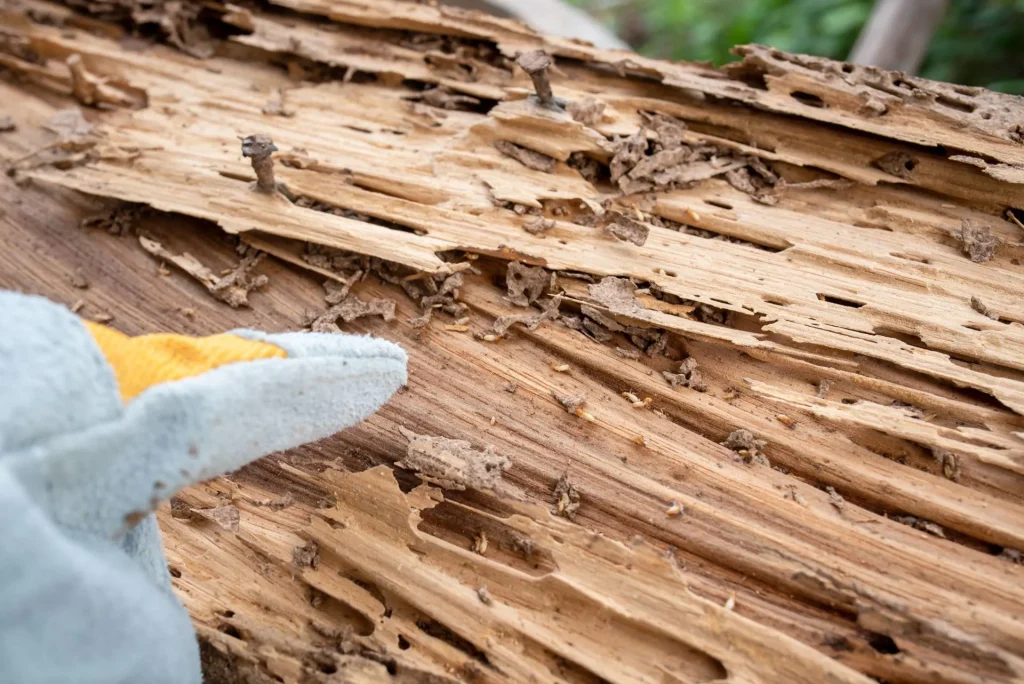
Termites eat wood from the inside out. They leave a thin outer shell that looks normal, but the inside has been turned into tunnels. When you tap it, that hollow echo tells you the structure is gone.
This is one of the most reliable early tests for termite damage to furniture. Do it on chairs, table legs, cabinet sides, drawer fronts, or anywhere there’s solid wood.
Tiny Exit Holes
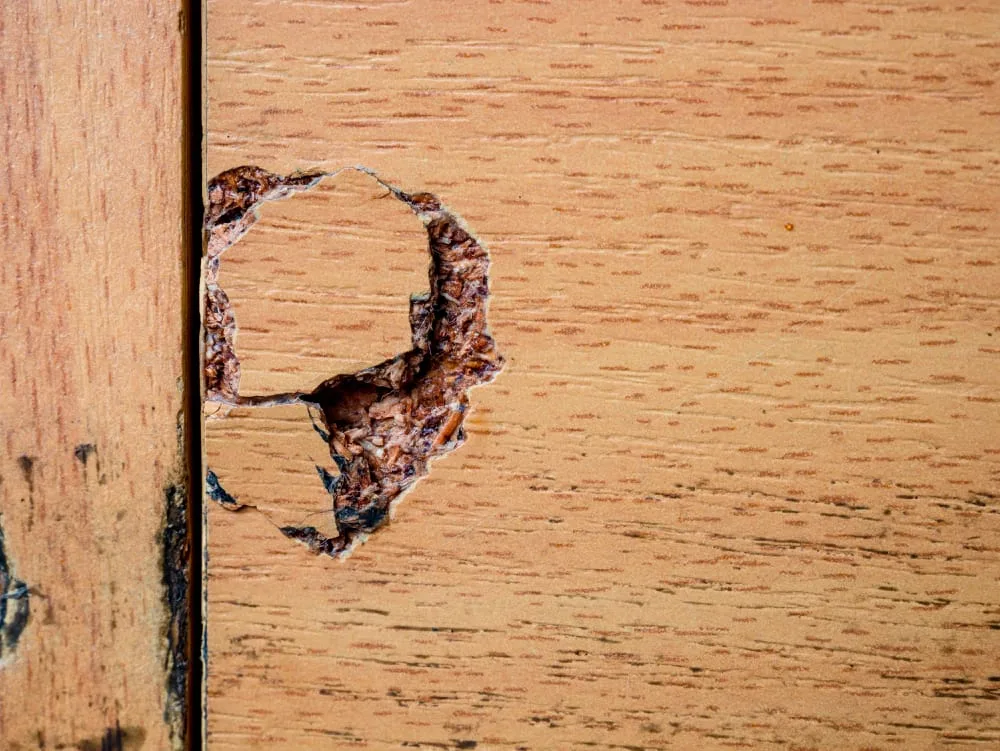
Look closely at the surface of your wood furniture. See small, perfectly round holes about the size of a pinhead?
Those are kick-out holes. Drywood termites create these to push their droppings out of the tunnels. The holes are usually 1–2 mm wide. They look almost too small to be significant, but they’re not.
Find one hole, and there are almost certainly more. And behind each hole is an active colony eating your furniture.
Frass (Termite Droppings)
Directly below those exit holes, you’ll often find a small pile of what looks like fine sawdust or coffee grounds.
That’s frass; termite feces. Drywood termites push their droppings out of their tunnels regularly. So if you see a small mound of grainy material near your wooden furniture, don’t assume it’s just dust.
Rub it between your fingers. Sawdust feels fibrous. Frass feels like tiny, uniform pellets. It can range from light beige to dark brown, depending on what wood they’ve been eating.
Fresh frass means termites are infesting that piece actively right now. Don’t ignore it.
Mud Tubes on or Around Furniture
This is one of the clearest signs of a termite infestation, specifically from subterranean termites, the species that nest underground and travel up.
Mud tubes are pencil-thin tunnels made of soil, wood particles, and termite saliva. Termites build them to travel between their underground colony and their food sources, including your wooden furniture.
Check the base of the furniture where it meets walls or flooring. Check the backs of cabinets sitting against walls.
Break a tube open if you find one. If it’s empty, the termites may have moved on. If it’s active, you’ll see live termites inside. Either way, the presence of mud tubes means there’s a termite infestation in or near your home.
Warped or Buckled Surfaces
Doors on your wooden cabinets suddenly sticking? Drawer fronts that used to slide smoothly now require extra force?
It’s not always humidity. Termite damage on furniture can cause wood to warp and buckle. As they eat through the interior structure, the wood loses its ability to hold its shape. Moisture from the tunnels also causes swelling.
If a wooden door or drawer starts behaving differently and you haven’t had any flooding or major humidity changes, check for termites.
Sagging or Soft Spots
Run your hand across wooden surfaces. Press lightly with your thumb.
Healthy wood is firm. Wood with termite damage feels soft, spongy, or gives way under light pressure. The structural integrity is compromised. What feels like a small soft spot on the outside could be massive damage underneath.
Pay extra attention to chair legs, table bases, and the corners and joints of pieces of furniture — areas where structural load is highest.
Swarmers (Winged Termites) Near Furniture
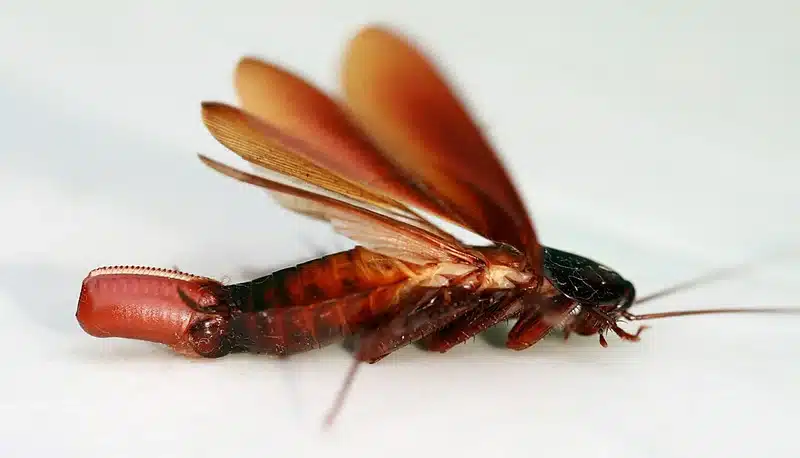
Winged termites, also called swarmers, appear when a colony is large enough to reproduce and establish new colonies. They’re often mistaken for flying ants.
Here’s how to tell the difference: termite swarmers have straight antennae, equal-length wings, and a thick waist. Flying ants have bent antennae, unequal wings, and a pinched waist.
If you see swarmers inside your home, especially near wooden furniture or windows, a colony is active and expanding. The wings are often shed after swarming, so you might find tiny discarded wings near baseboards, windowsills, or furniture legs.
Don’t brush them off. That’s one of the most urgent signs of termite activity you can spot.
What Causes Termite Damage to Furniture
Credit: trustterminix.com
Understanding the cause helps you stop the next infestation before it starts.
High humidity. Termites need moisture. Poorly ventilated rooms, basement furniture, and pieces near plumbing are all at higher risk. Subterranean termites and dampwood termites especially rely on moisture to survive.
Wood-to-soil contact. Any wooden furniture leg or base touching soil or damp concrete gives subterranean termites direct access. This is the number one entry point.
Untreated or old wood. Factory-sealed furniture has some protection. Old, bare, or weathered wood doesn’t. Vintage pieces and antiques are especially vulnerable to wood damage.
Bringing in infested furniture. This surprises people. You can introduce termites into your home by buying secondhand furniture that’s already infested. Always inspect used wooden pieces carefully before bringing them inside.
Proximity to an existing infestation. If your walls, floors, or structural wood already have termites in your home, the infestation will spread to your furniture. It’s one connected colony, not isolated incidents.
How to Fix Termite-Damaged Furniture
Credit: homeintegrity.com.au
OK, you’ve found damage. What now?
Step 1: Confirm It’s Termites
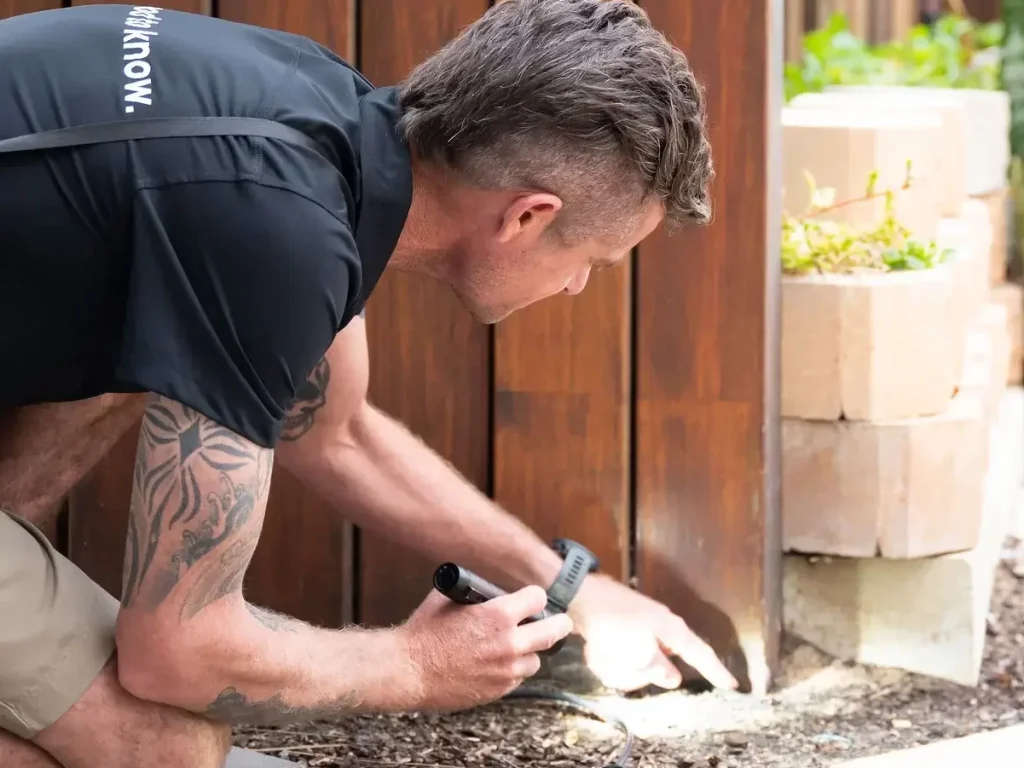
Before you treat anything, confirm what you’re dealing with. Look for the combination of signs of termite activity: hollow wood, frass, exit holes, or mud tubes. If you’re unsure, schedule a termite inspection with a licensed professional. Misidentifying the pest means mistreating it.
Step 2: Isolate the Infested Furniture
Move the infested furniture away from other wooden items immediately. Don’t leave it against walls or touching floors. Bag any loose debris carefully; frass and shed wings can carry eggs.
Step 3: Treatment Options
For minor, localized termite damage:
- Borate-based treatments like Tim-bor or Boracare penetrate wood and kill termites on contact. These are available at hardware stores and are relatively safe for indoor use.
- Orange oil (for drywood termites) contains d-limonene, which kills termites on contact. Orange oil works best for small, accessible infestations and is a popular non-fumigation option.
- Heat treatment, exposing furniture to temperatures above 120°F for at least 30 minutes, can kill termites throughout the piece. Some termite control companies offer this as a localized service.
For significant or widespread termite damage:
Call a professional pest exterminator. A licensed exterminator can assess whether the furniture is worth treating or needs to be disposed of. They can also determine if the infestation has spread to your home’s structure, which changes the entire treatment plan.
For whole-home infestations involving both furniture and structural damage, fumigation may be the most effective option.
Step 4: Repair the Wood
Once termites are eliminated, assess the termite damage wood damage that’s left behind.
- Wood hardener (like Minwax Wood Hardener) can consolidate and strengthen wood furniture that’s been damaged but not completely destroyed.
- Epoxy wood filler works well for filling cavities and restoring shape.
For load-bearing pieces (chair legs and table bases), replacement is often safer than repair. Structurally compromised pieces of furniture can fail without warning.
How to Prevent Termite Damage to Furniture
You can’t always stop termites from trying. But you can make your wooden furniture a very unattractive target.
- Keep furniture off the ground. Use rubber or plastic feet. Don’t let wooden legs sit directly on concrete or soil; this cuts off the main access point for subterranean termites.
- Control humidity indoors. Use dehumidifiers in basements and storage rooms. Termites struggle in dry environments. Reducing moisture is one of the most effective termite control steps you can take.
- Apply termite-resistant finishes. Varnish, lacquer, and borate-based wood treatments create a protective barrier on wood furniture.
- Inspect regularly. Especially furniture in dark, rarely-used areas. Storage rooms, guest bedrooms, and basements are common places where termites can infest for years undetected.
- Inspect secondhand furniture before purchase. Tap it. Look for frass, holes, or soft spots. Don’t bring infested furniture into your home.
- Schedule a professional termite inspection annually. Especially if you live in a high-risk region (Southeast US, California, Gulf Coast). A trained inspector catches signs of a termite infestation that most homeowners miss entirely.
Ending Remarks
Termite damage to furniture is one of those problems that starts invisible and ends up expensive. The good news is, the signs are there if you know what to look for: hollow wood, frass, tiny exit holes, warping, and mud tubes.
Catch it early, isolate the piece, treat it properly, and fix the conditions that make termites in your home want to stay. And if the damage has already gone deep, don’t guess; get a professional termite inspection done and act on it fast.
Your furniture is worth protecting. And now you know exactly how to do it.
Frequently Asked Questions
Let’s have a look at a few of the commonly asked questions about termite damage to wood.
How can I tell if my furniture has termites or just regular wood rot?
Wood rot is caused by moisture and fungal growth. It tends to feel spongy and may look discolored or fuzzy. Termite damage on furniture leaves hollow tunnels, exit holes, and frass (small pellet-like droppings). If you see small round holes or granular debris near the furniture, termites are the more likely culprit.
Can termites damage furniture and then spread to my house?
Yes, absolutely. If a colony is established in your wooden furniture, it’s connected to a larger network. Subterranean termites use mud tubes to travel, and drywood termites can swarm and start new colonies elsewhere.
Is it worth trying to save termite-damaged furniture, or should I throw it out?
It depends on how far the termite damage to furniture has gone. Minor surface damage can often be treated and repaired with wood hardener and epoxy filler. But if structural components like legs or joints are compromised, replacement is the safer call.
Can I use DIY treatments, or do I need a professional for termite control?
Small, localized infestations caught early can sometimes be handled with borate-based sprays, orange oil, or heat treatment. But if you’re unsure of the extent, if the infestation has spread, or if you’re seeing swarmers inside your home, call a professional. DIY termite control often misses the full colony and gives the infestation time to grow.
How often should I check my furniture for signs of termite damage?
Do a quick visual and tap-test inspection every three to six months, especially on pieces of furniture in storage areas, basements, or rooms you don’t use daily. If you live in a high-termite-risk area, schedule an annual professional termite inspection for your whole home. Catching the signs of a termite infestation early is always cheaper than repairing the damage later.