When it comes to keeping your home in tip-top shape, there are a few silent threats you definitely don’t want to overlook—termite damage and wood rot. While they both seem to share a common enemy—wood—they’re actually two very different issues. And understanding the difference between termite damage vs. wood rot could be the key to saving your home from costly repairs. Trust me, I’ve learned the hard way that catching these problems early is half the battle. In this post, we’ll dive into what termite damage and wood rot are, how to spot them before they wreak havoc, and the best ways to treat or prevent both. Let’s get started and make sure your home stays strong and safe!
What Is Termite Damage?
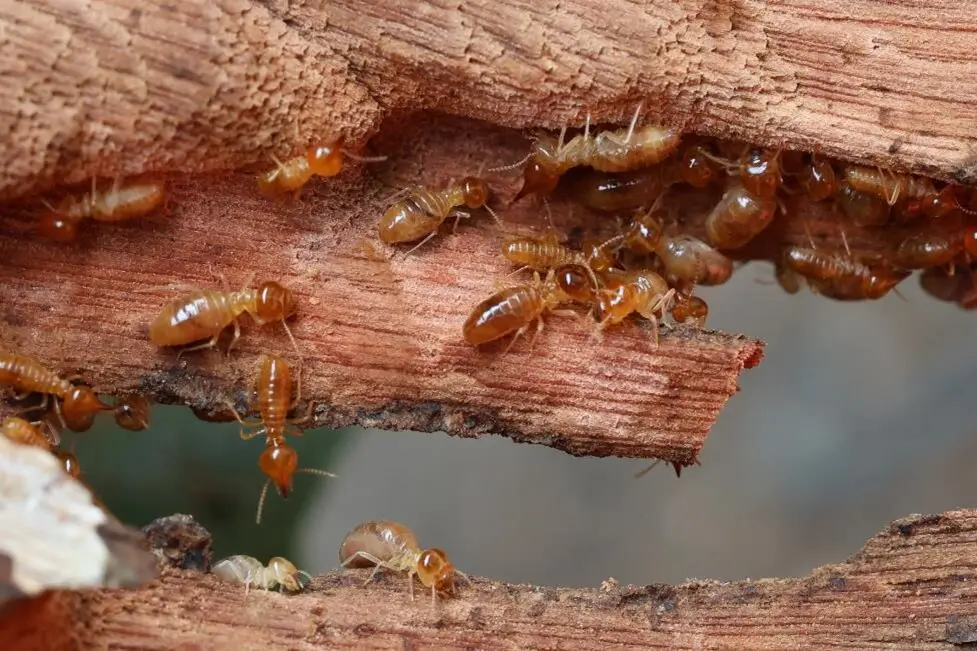
Termites may be tiny, but they pack a big punch when it comes to damaging your home. These little insects feed on wood, and while they might seem harmless at first, they can cause serious damage to the structural parts of your house. There are a couple of main types of termites that can wreak havoc: subterranean termites and drywood termites.
- Subterranean termites live in the soil and build tunnels to reach wood.
- Drywood termites prefer to live directly in the wood they infest.
How Do Termites Cause Damage?
Termites get to work by eating away at the cellulose in wood. Their damage is sneaky because it’s slow and often goes unnoticed until it’s too late. Here’s what to look out for:
- Hollowed-out wood: The wood may sound hollow when tapped.
- Droppings: Look for small piles of wood-colored pellets.
- Swarming termites: You might spot wings or termites flying around in the spring.
Unlike wood rot, termites often don’t leave visible signs like discoloration, making them harder to spot until they’ve done some serious damage. Keeping an eye out for these subtle clues can help you catch an infestation early.
How to Control Termites in Wood
Credit: rovepestcontrol.com
If you’re dealing with termite damage, the first step is controlling the infestation. Termite control for wood is essential to protect your property. The safest termite control for wooden homes involves using eco-friendly termite control options, such as termite control spray for wood. For drywood termite control, special treatments like dry wood termite treatments are necessary to kill the termites deep within the wood.
Termite Wood Treatment
When it comes to termite wood treatment, the right approach depends on the type of termites you’re dealing with. Whether you’re tackling a drywood termite problem or trying to prevent future infestations, there are several options available to protect your home. Let’s break it down:
Treatment Options for Termites
- Drywood Termite Treatment: If you’ve got drywood termites, you’ll typically need a targeted approach. This often involves applying termiticides directly to the wood. It’s like giving your home a protective shield, keeping the termites out.
- Bait Systems: Another method is using termite bait systems. These baits attract termites, and once they consume it, they carry it back to their colony. The beauty of this system? It eliminates the entire colony without damaging the wood itself.
Preventing Termite Infestations
- Termite-Resistant Wood: If you’re building or renovating, consider using pressure-treated wood. This wood is infused with chemicals that make it naturally resistant to termites, reducing the risk of infestations down the line.
- Termite Baits: If you already have an active infestation, termite baits can be an effective solution. By placing them where termites are active, you can lure them in and wipe out the colony.
Pro Tip:
For the best results, always consult a pest control professional. They can help you determine the best treatment for your specific situation and make sure you’re using the right methods to protect your home from these destructive pests.
Do Termites Eat Treated Wood?
Credit: varsitytermiteandpestcontrol.com
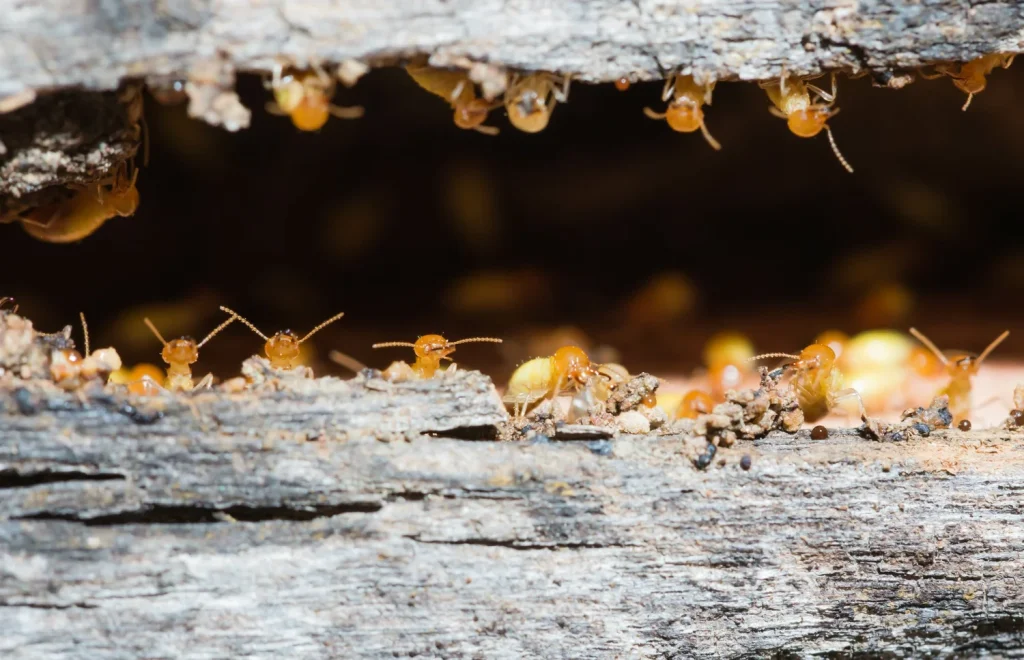
A common question is, “Do termites eat treated wood?” The answer is no, termites usually won’t feed on pressure-treated wood because it’s infused with chemicals designed to deter them. However, treated wood can still be vulnerable to damage over time if the treatment starts to wear off, especially at exposed edges or breaks in the wood.
What Is Wood Rot?
Wood rot, on the other hand, is caused by a fungal infection. When wood is exposed to moisture for long periods, fungi can start to break it down. Wood rot typically occurs in areas that are constantly wet, such as bathrooms, basements, or areas with leaking pipes. Unlike termites, which feed on wood, fungi in wood rot decay the wood, making it soft and spongy.
There are two main types of wood rot:
- Dry Rot: Dry rot is caused by a specific fungus called Serpula lacrymans. This fungus thrives in damp, poorly ventilated environments, and once it gets into your wood, it can spread quickly. Dry rot causes the wood to dry out and become brittle, leading to significant structural damage.
- Wet Rot: Wet rot, caused by a variety of fungi, requires constant moisture to develop. Wet rot damages wood by breaking down the cellulose, causing it to soften and lose strength. This type of rot is more common in areas with excess water, like leaky roofs or windows.
How Does Wood Rot Compare to Termite Damage?
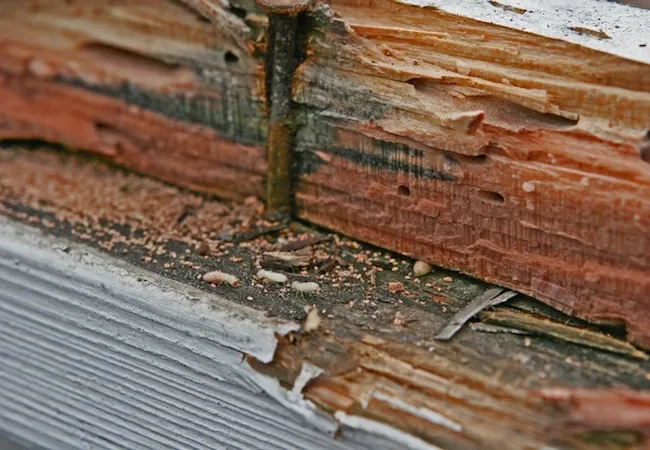
The main difference between termite damage vs. wood rot is how they affect the wood. Termites eat the wood from the inside out, leaving behind hollowed-out sections that may look fine on the surface. On the other hand, wood rot decays the wood from the outside in, making it look discolored, soft, and sometimes even smelly.
Both termite damage and wood rot weaken the structural integrity of wood, but termites are more insidious, often causing damage before you even realize it’s happening. Wood rot, while also damaging, is usually easier to spot because it leads to obvious signs like soft, crumbly wood and a musty smell.
How to Prevent Termite Damage and Wood Rot
Credit: bobvila.com
Now that we know the difference between termite damage and wood rot, let’s talk about how to prevent both.
Preventing Termite Damage
- Regular Inspections: Regular pest inspections are the best way to detect termites early before they cause extensive damage. A pest control expert can look for signs of termite activity, such as mud tunnels or swarming termites.
- Maintain Wood Treatment: Use termite wood treatment to protect your home’s wooden elements. Be sure to check for signs of damage and reapply treatments as necessary.
- Seal Gaps and Cracks: Termites often enter through tiny cracks or gaps in your foundation, windows, or doors. Seal any openings around your home to make it harder for termites to get inside.
- Use Termite-Resistant Materials: Consider using naturally resistant or pressure-treated wood for decks, porches, and any wood elements that are exposed to the elements. These materials are less likely to attract termites.
- Termite Bait Systems: Bait systems are a great way to monitor and control termite populations around your home. These systems will attract termites and eliminate them before they can cause significant damage.
Preventing Wood Rot
- Fix Leaks: The best way to prevent wood rot is by addressing moisture issues. Fix any leaks in your plumbing, roof, or foundation to keep water away from wooden surfaces.
- Proper Ventilation: Make sure your attic, basement, and crawl spaces are well-ventilated. This helps keep moisture levels low and prevents fungal growth.
- Apply Wood Preservatives: Use a wood preservative to treat wooden structures in areas prone to moisture. This will help protect your wood from both rot and termites.
- Keep Gutters Clean: Clogged gutters can cause water to overflow and run down your walls, promoting wood rot. Clean your gutters regularly to prevent water damage.
How to Treat Termite Damage and Wood Rot
Termite Treatment: As mentioned, drywood termite treatment is essential if you suspect drywood termites in your home. For subterranean termites, you may need to use liquid termiticides or a bait system to eliminate the colony. Work with a professional pest control service to assess your infestation and recommend the best treatment plan.
Wood Rot Treatment: For wood rot, you’ll need to remove the affected wood and replace it with new, dry wood. You may also need to treat the surrounding area with a wood preservative to prevent future rot.
FAQ’s
Here’s a quick look at some frequently asked questions about termite damage vs. wood rot.
How can I tell if my home has termite damage or wood rot?
Look for hollowed-out wood (termite damage) or soft, spongy, and discolored wood (wood rot).
Can termite damage be repaired?
Yes, by replacing the affected wood and treating the remaining wood with a termite-resistant solution.
Can I prevent both termite damage and wood rot?
Yes, with regular inspections, moisture control, and treated wood.
How often should I treat wood for termites?
Every few years, especially in areas prone to termite infestations.
Are there eco-friendly options for termite control?
Yes, like bait systems and natural treatments that are safe for your home and the environment.