Let me tell you something up front. Termites are not like other pests. A cockroach? You see it running across your kitchen floor at 2 AM. A rat? You hear it scratching in the attic. But termites? They are ghosts. They work in the dark and silence. And by the time you realize they’re there, the damage is already done. I have looked at dozens of blogs, expert guides, and pest control resources on this topic. And here is the truth they all agree on: termite damage to wood is the most overlooked, misunderstood, and expensive problem a homeowner can face.
So let’s fix that. Let me walk you through everything you need to know. The signs and solutions. And the hard question: when do you just replace the wood?
Why Termites Are Called “Silent Destroyers”
Credit: aimvopestcontrol.com
Here is the scary part.
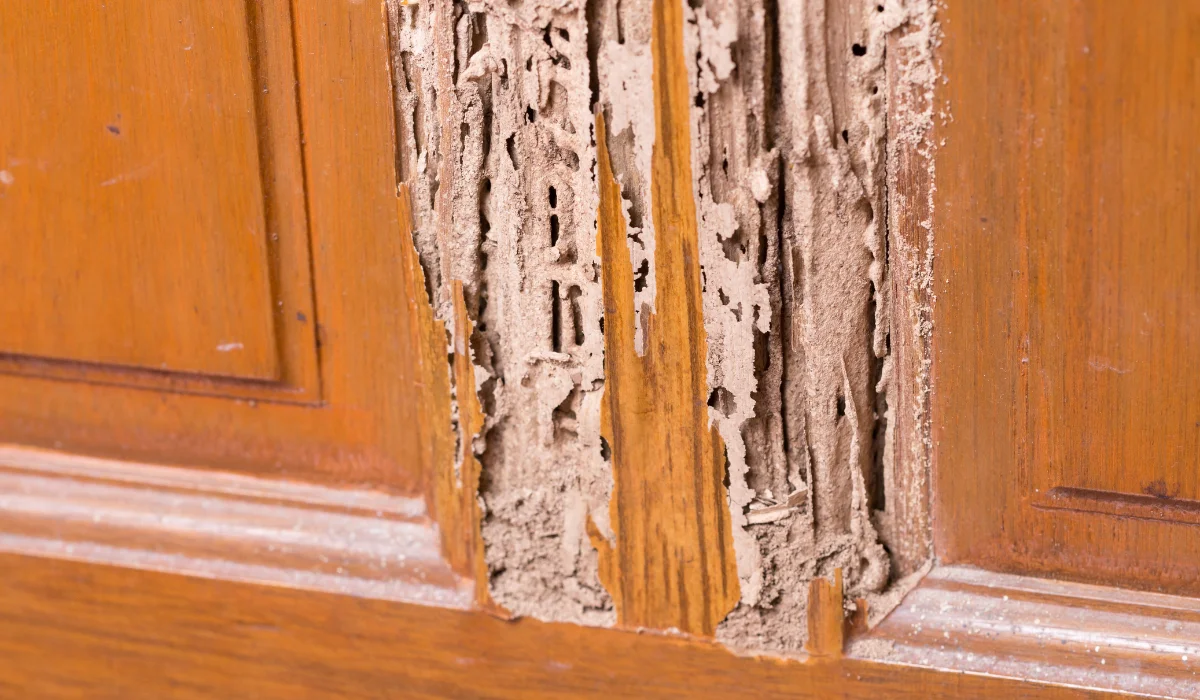
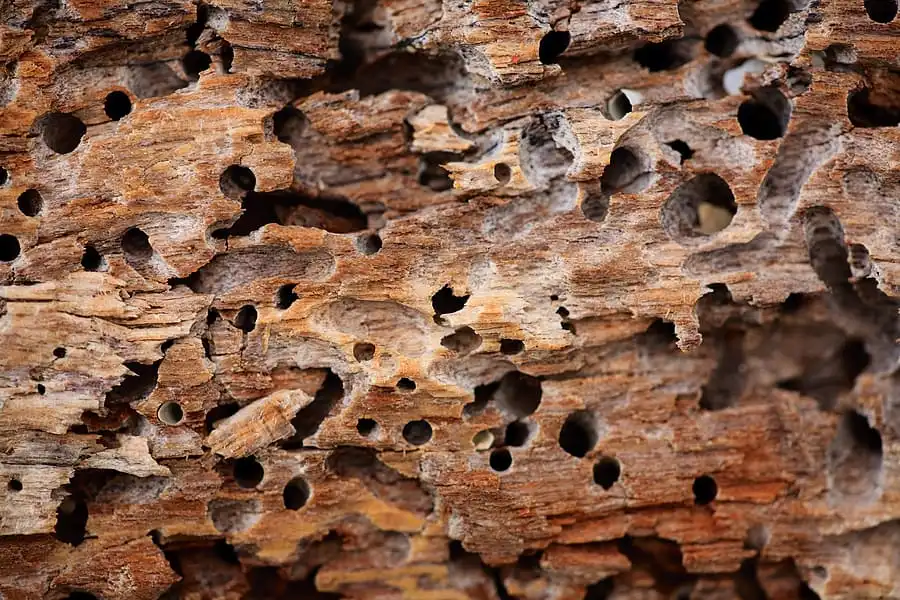
Termites eat wood from the inside out. They leave the outer surface looking perfectly fine. It is like an apple that looks juicy on the outside but is completely rotten inside. You tap on a beam, and it sounds solid. But inside? Hollow. Empty. Gone.
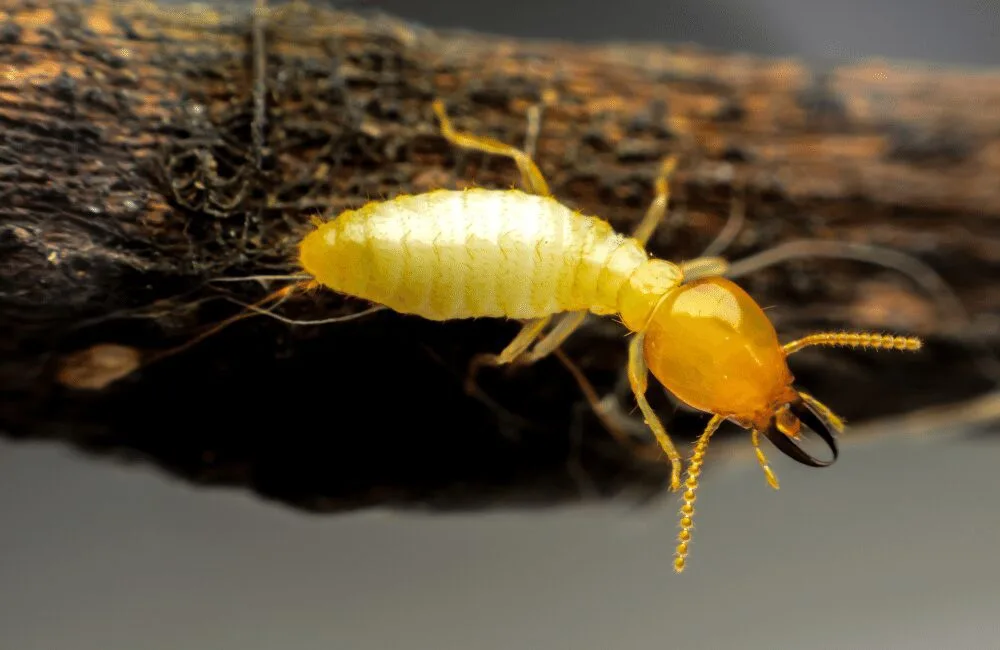
Subterranean termites are the most common culprits. They live underground and build mud tunnels to travel up into your home. They need moisture to survive. And they never stop eating, 24 hours a day, 7 days a week.
Drywood termites are different. They live inside the wood itself; they don’t need soil contact. They can infest furniture, window frames, and even wooden sculptures.
Both types cause serious termite damage to wood. Both types cause damage to wood that hides very well. Understanding the difference helps you catch termite activity early and take action to prevent future infestations. If you want a deeper look at the actual damage from termites, check out this guide.
7 Warning Signs of Termite Damage to Wood
Let me give you the exact signs of termite damage. These come straight from pest control professionals. If you see even one of these, take it seriously. Early detection is your best defense against expensive structural repairs.
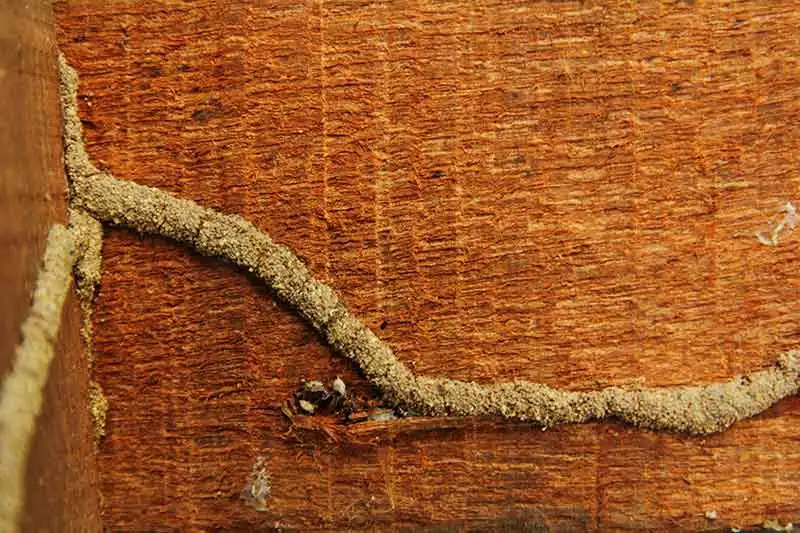
Mud Tubes on Your Foundation
Credit: amdro.com
This is the biggest red flag.
Subterranean termites build pencil-sized tunnels made of dirt and saliva. These tubes protect them from dry air and predators. You will find them running up your foundation walls, in crawl spaces, and along basement walls.
Here is a simple test. Break open a small piece of the tube. If it gets rebuilt within a few days, you have an active colony. Call a professional immediately.
Check these spots regularly:
- Foundation walls near the soil
- Crawl spaces and basements
- Around pipes and plumbing entries
- Concrete slabs and expansion joints
Hollow-Sounding Wood
Credit: preventivepestsocal.com
Grab a screwdriver or even a pencil.
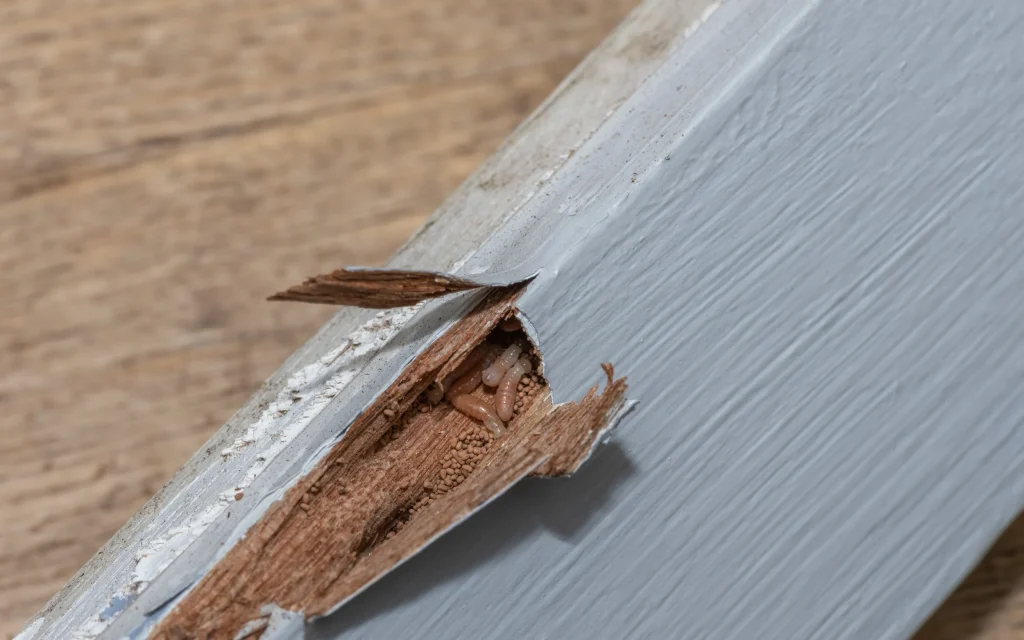
Walk around your home. Gently tap on wooden surfaces. Door frames. Window sills. Baseboards. Support beams in the basement. If the wood sounds hollow or papery, termites are eating it from the inside.
This is one of the earliest signs of termite damage. And it is completely free to check. Do it once a month. This is actually how professionals assess termite damage during inspections; they listen for that hollow, papery sound that indicates damaged wood.
Bubbling or Cracked Paint
Credit: positivepest.net
This one tricks a lot of people.
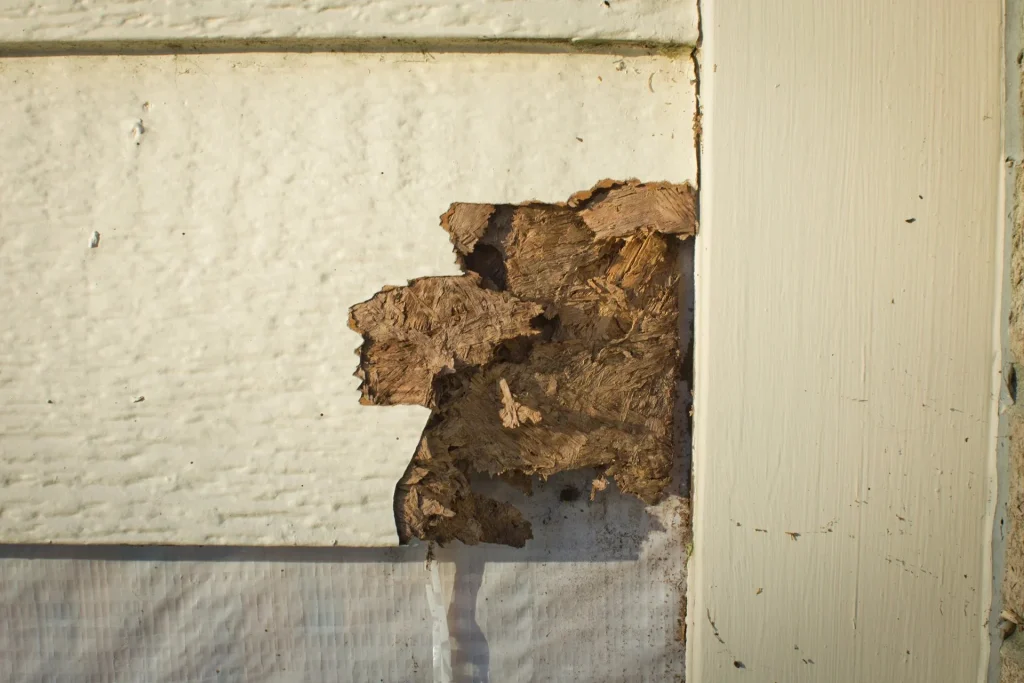
You see bubbling paint on a wall or window frame. Your first thought is water damage. But here is the thing. Termites produce moisture as they tunnel through wood. That moisture makes the paint bubble and peel.
Press on the bubbled area with your finger. Does it feel soft? Does it sink in? Then it is probably termites. Wood rot vs termite damage can be confusing, but termite-damaged areas often feel softer and show signs of ongoing termite activity.
Look closely at:
- Window frames and door frames
- Wooden siding on the exterior
- Baseboards and crown molding
- Any spot that looks like water damage but has no leak nearby
Frass: Termite Droppings
Credit: bettertermite.com
This one is gross but very useful.
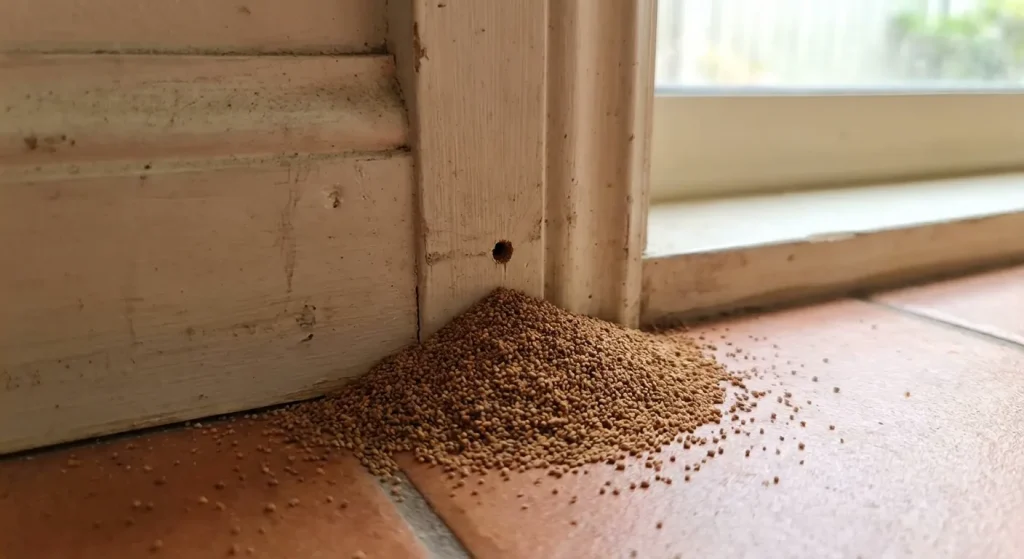
Drywood termites push their droppings out of tiny holes in the wood. These droppings are called frass. They look like small, oval-shaped pellets. Kind of like sawdust or coffee grounds.
You will find small piles of frass under furniture, on windowsills, or near wooden trim. Clean it up. If it comes back the next day, termites are actively feeding. This is a clear sign of termite activity in your home.
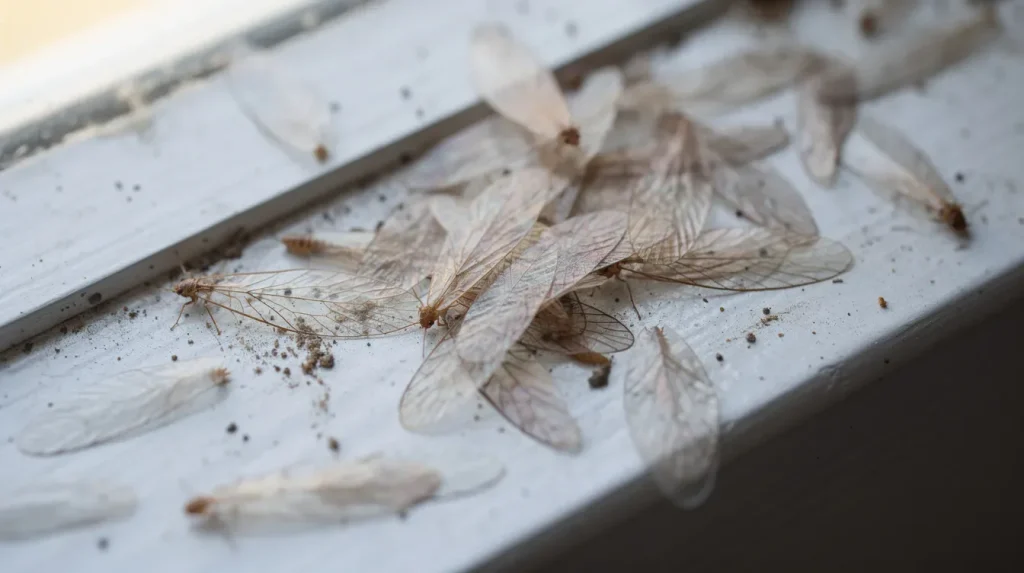
Discarded Wings
Credit: millerthekiller.com
When termites swarm, they fly out to start new colonies.
After mating, they drop their wings. You will find small piles of these wings near windows, doors, and light sources. The wings look like tiny fish scales. They are translucent and equal in size.
Finding wings inside your home is a big deal. It means swarmers have already found a way in. A termite infestation is likely established nearby.
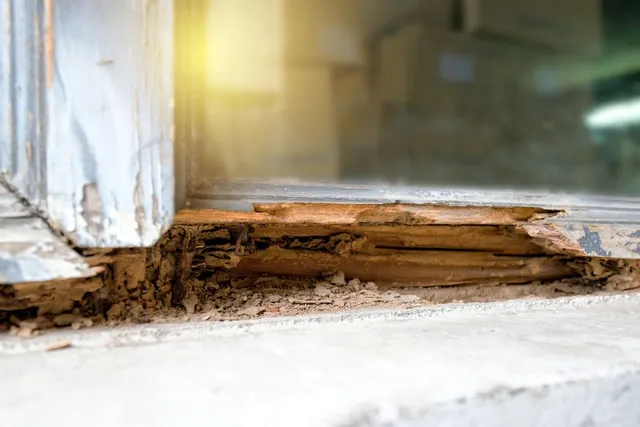
Stuck Windows and Doors
Credit: woodlandwindows.com
This is a subtle sign.
Suddenly, your windows are hard to slide open. Your door is sticking in the frame. You blame humidity. But think again.
Termites create moisture as they eat wood. That moisture makes the wood swell and warp. The frame becomes tight. Doors drag. Windows jam. This can affect your home’s functionality and value. If this happened gradually and matches no other cause, check for termite damage.
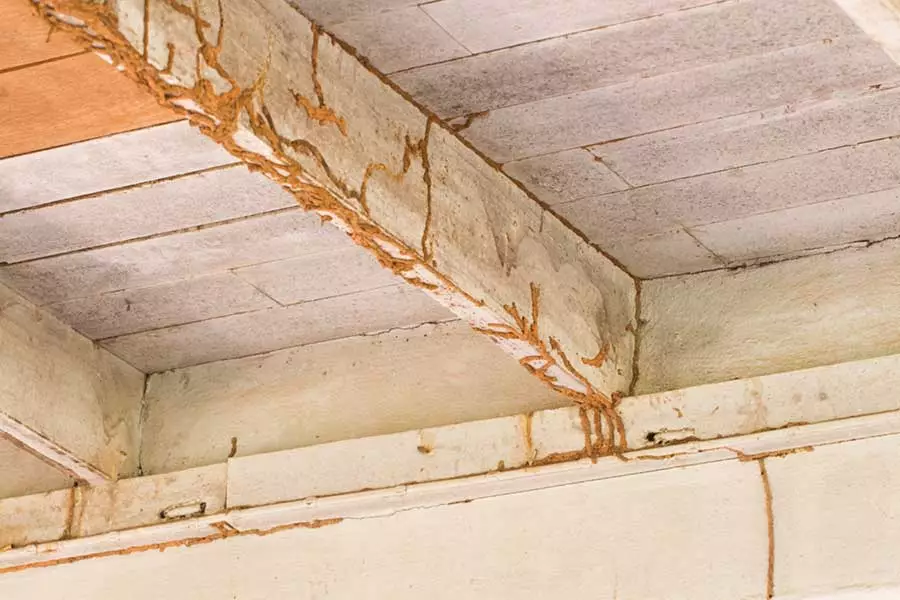
Buckling Floors and Sagging Ceilings
Credit: loyalpest.com
This is a late-stage sign.
Termites have been working for months or years. The structural integrity is compromised. Floors start to buckle, and ceilings begin to sag. You may notice loose tiles or extra squeaky floorboards.
If you are at this stage, do not wait. The damage is already severe. Get a professional pest control inspection today. At this point, structural repairs are likely necessary.
Solutions: What to Do About Termite Damage to Wood
Okay. You found the signs. Now what?
Step 1: Do Not Disturb
Do not remove mud tubes. Do not break open damaged wood. Leave everything as it is. A professional needs to see the evidence to assess the situation.
Step 2: Schedule a Professional Inspection
This is non-negotiable. You cannot treat termites on your own with store-bought sprays. Termite inspections by professionals have the tools and training to find hidden colonies. They can identify the species and recommend the right termite treatment.
Step 3: Choose the Right Treatment
There are two main approaches.
- Liquid treatments (termiticides): A chemical barrier is applied around your home’s structure. Termites cross it and die. This is effective for subterranean termites and helps prevent future termite activity.
- Baiting systems: Bait stations are placed around your property. Termites feed on the bait. They carry it back to the colony. The entire colony is eliminated. This is a long-term solution for termite control.
- Fumigation: For severe, widespread termite infestation (especially drywood termites). The entire house is sealed and filled with gas. This kills every termite inside.
Step 4: Fix Moisture Issues
Termites love moisture. Fix leaky pipes. Clean your gutters. Improve ventilation in crawl spaces. Remove standing water near your foundation. If you take away the moisture, you make your home less inviting. This is one of the best ways to prevent future infestations.
Step 5: Remove Wood-to-Ground Contact
Do not let firewood touch the soil. Do not let mulch pile up against your foundation. Keep wooden debris away from your home. Termites travel from soil to wood. Break that path.
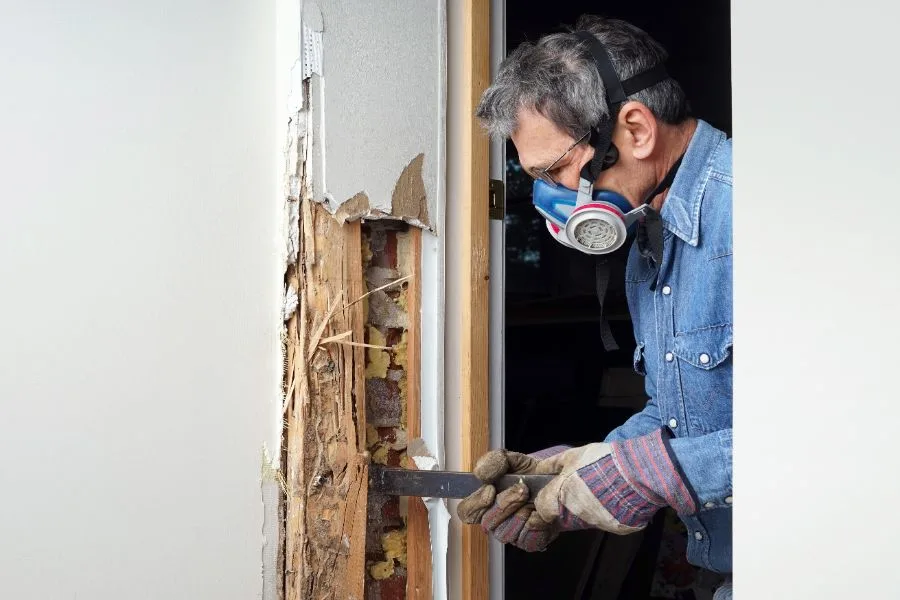
How to Repair Termite-Damaged Wood (And When to Replace It)
Credit: trustspringer.com
This is the hardest question homeowners face: how to repair termite-damaged wood?
Not every piece of damaged wood needs to be replaced. Sometimes you can repair it, and sometimes you have to tear it out. Understanding your options saves money and stress.
How to Fill Termite-Damaged Wood
If the damage is shallow and localized, you can repair it yourself.
Here’s how to repair termite damage in wood:
- Clean the area: Remove all loose, damaged wood with a chisel or scraper.
- Inspect thoroughly: Make sure termite activity has stopped. Treat the area if needed.
- Apply wood filler: Use a high-quality wood filler rated for exterior or interior use. Pack it tightly into the damaged area.
- Sand smooth: Once dry, sand the filled area until it’s flush with the surrounding wood.
- Seal and paint: Apply wood sealant and paint to protect your repair and prevent moisture.
This method works for how to fill termite-damaged wood in baseboards, trim, and non-structural areas.
When to Replace Termite-Damaged Wood
Does termite-damaged wood need to be removed? Sometimes, yes.
Here is how to decide:
Repair if:
- The damage is localized and shallow
- The wood still feels structurally sound
- The termite infestation has been fully treated
- You can sand, fill, and seal the affected area
- It’s not a load-bearing element of your home’s structure
Replace if:
- The wood is hollow or crumbling
- More than 50% of the wood is damaged
- The structural integrity is compromised
- The damage is in a load-bearing beam or joist
- The termite infestation was active for a long time
- It affects critical parts of your home’s structure
Best way to fix damaged termite wood in structural areas? Replacement. This is non-negotiable for safety.
When in doubt, consult a contractor. A pest control expert can tell you if the termites are gone. But a structural expert can tell you if the wood is still safe. Repairing termite-damaged wood in the wrong situation can create serious safety hazards.
The Cost Factor
Simple damage repair with wood filler might cost under $100. Completing how to repair termite-damaged wood through structural replacement can cost thousands.
That is why early detection through regular termite inspections matters so much. Catching the problem early means cheaper repairs.
Wood Rot vs Termite Damage: How to Tell the Difference
Credit: callnorthwest.com
People constantly confuse these. Here is the difference.
Termite damage
- Hollow wood that sounds papery when tapped
- Mud tubes present (subterranean termites)
- Frass piles visible
- Damage follows wood grain patterns
- Active termite activity ongoing
Wood rot
- Soft, soggy wood that crumbles easily
- No mud tubes or insects visible
- Caused by moisture and fungus
- Damage more random and scattered
- Caused by environmental factors
Wood rot vs termite damage requires different solutions. Termite damage needs pest control treatment. Wood rot needs moisture control and replacement.
Prevention: The Best Way to Avoid Future Termite Damage
Here is the truth. Once you understand termite damage to wood, you will want to prevent future problems. Smart homeowners focus on prevention.
To prevent future infestations:
- Schedule annual termite inspections with a professional
- Keep your gutters clean and free-flowing
- Fix plumbing leaks immediately
- Maintain proper ventilation in crawl spaces
- Keep firewood and mulch away from your home’s structure
- Seal cracks in your foundation
- Remove dead trees and stumps from your property
- Use drywood termite and subterranean termite barriers during construction if building new
Prevention is cheaper than a cure. A small termite treatment to prevent future problems beats expensive structural repairs every time.
Ending Remarks
Termites are patient and persistent. And they are expensive.
But you are not helpless. You can catch them early and treat them effectively. And you can prevent future infestations from destroying your home’s structure.
Check your home regularly. Look for mud tubes, hollow wood, bubbling paint, and frass. Remember this. The cost of prevention is small. The cost of ignoring termite damage to wood; that is the real nightmare. Stay sharp and proactive. Your home will thank you.
Frequently Asked Questions
Let’s talk about a few of the frequently asked questions about termite damage to wood that people keep asking us.
Can termite-damaged wood be saved?
Yes, if the damage is minor and localized. You can sand, fill with wood filler, and seal the area after the termite infestation is treated. But if the wood is hollow, crumbling, or compromises structural integrity, replacement is the safer choice. Not all damaged wood can be repaired.
How long does it take for termites to cause serious damage?
It depends on the colony size and species. A large colony can cause significant structural damage in 3 to 8 years. But signs of termite damage can appear much sooner if you know what to look for. This is why regular termite inspections matter.
How is termite damage different from water damage?
They look very similar. The key difference is the hollow sound. Termite damage to wood sounds papery or hollow when tapped. Water-damaged wood often feels soggy, not hollow. And termite damage may come with mud tubes or frass nearby.
Does homeowners’ insurance cover termite damage?
Almost never. Most standard policies exclude termite damage. They classify it as a preventable maintenance issue. That is why early detection and regular termite inspections are so important.
Can I treat termites myself without professional pest control?
Not effectively. Store-bought sprays and foams may kill a few termites on contact. But they cannot reach the colony. The colony continues to grow. Professional termite treatment options like baiting systems and liquid barriers are the only reliable solutions.
Key Takeaways
- Termite damage to wood is the most expensive pest problem homeowners face
- Early signs of termite damage include hollow wood, mud tubes, and bubbling paint
- Both drywood termite and subterranean termite infestations require professional treatment
- How to repair termite-damaged wood depends on the severity; some can be filled, others must be replaced
- Regular termite inspections and moisture control prevent future infestations
- Structural integrity is non-negotiable; never skip a professional assessment for load-bearing elements