Out of all arthropods, centipedes and millipedes might be the most fascinating. These long-legged creatures have segmented bodies and belong to a group called Myriapoda. At first glance, they look almost identical. Both crawl through damp spaces, and both have dozens of legs moving at once. But once you look closer, the differences become clear. Their behavior, diet, and even their defense systems are completely different. One relies on venom to hunt prey. The other uses chemical secretions to defend itself. So if you have ever wondered whether they are poisonous, venomous, or harmless, the answer depends on which one you are looking at. In this guide, we will break down millipedes vs centipede in simple terms so you can easily tell them apart.
Millipedes vs Centipede: Quick Difference Table
Before we dive deeper, here is a quick overview of the biggest differences:
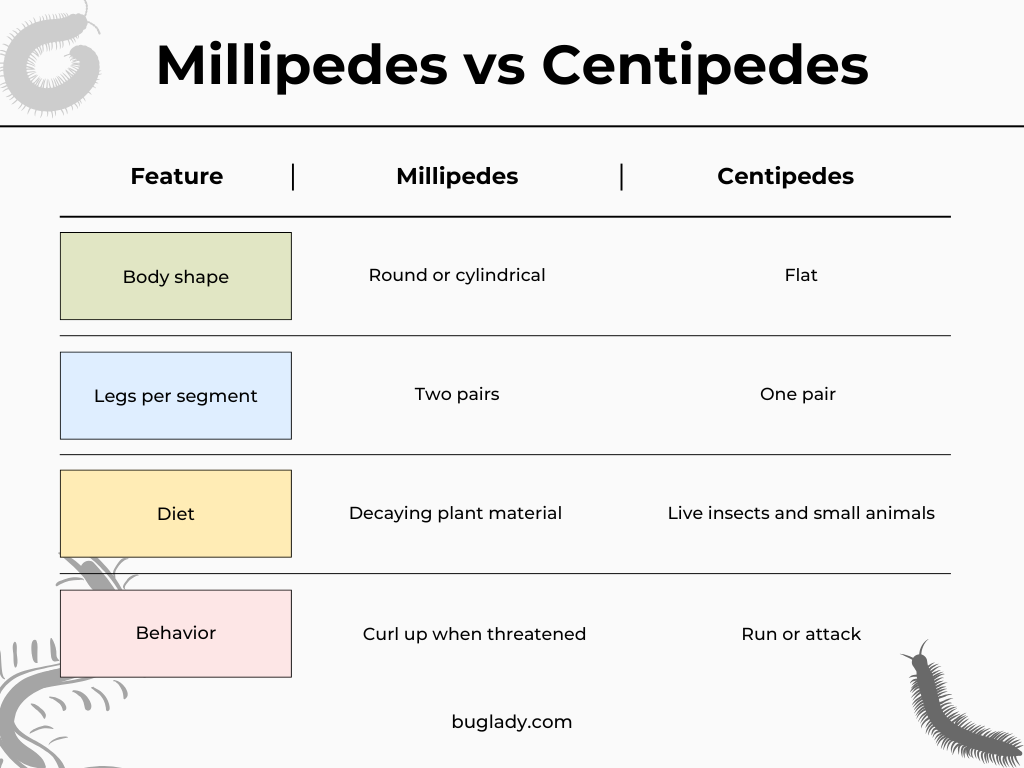
Understanding these differences makes the millipedes vs centipede debate much easier.
Body Shape and Appearance
One of the easiest ways to identify these creatures is by looking at their bodies.
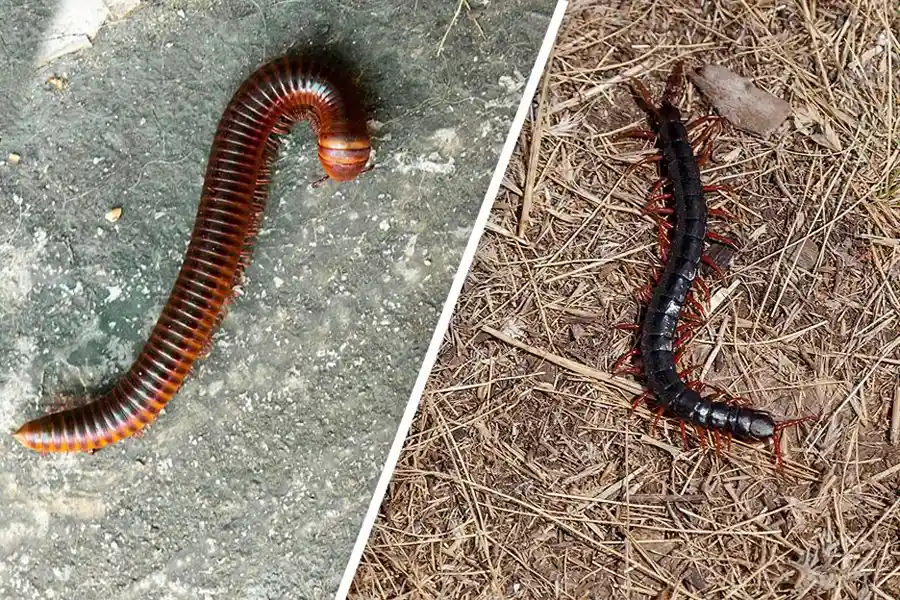
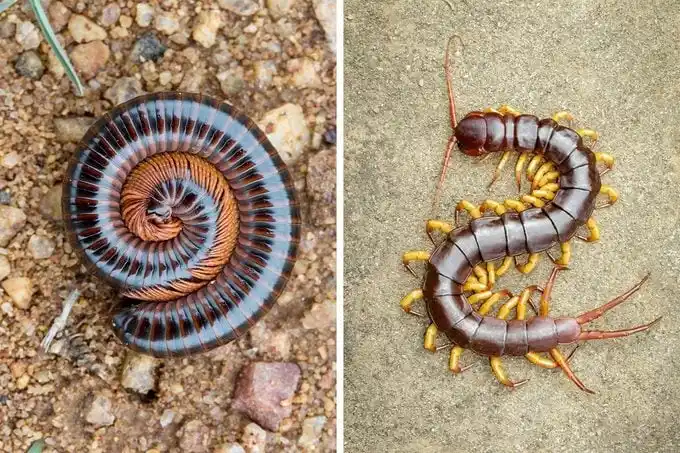
Millipedes have a round, cylindrical body. Their legs are tucked underneath the body, which makes them appear smoother and thicker.
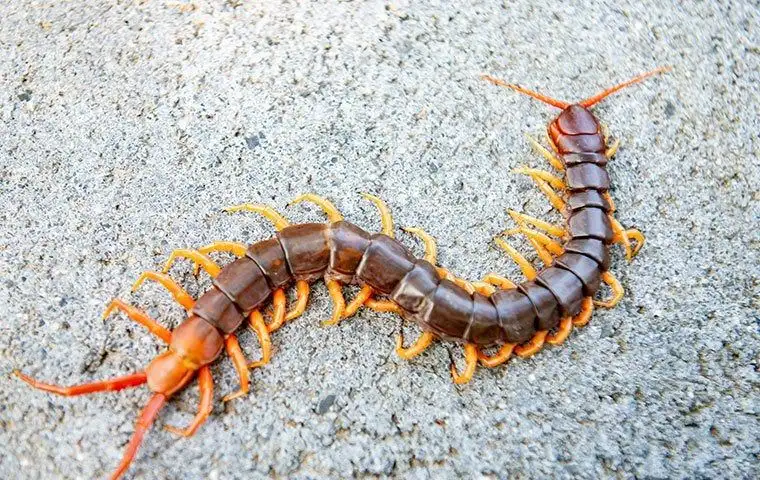
Centipedes look completely different. Their bodies are flat, and their legs stick out from the sides. This gives them a spiky appearance that many people notice immediately.
Each creature also has multiple body segments, which hold its legs.
Millipedes usually have:
- Rounded body shape
- Smooth appearance
- Legs tucked under the body
- Dark brown or black colors
Centipedes usually have:
- Flat body shape
- Long legs extending outward
- Visible antennae and a distinct centipede face
- Thin, flexible body
These differences become even clearer when comparing a giant centipede vs millipede, especially with larger species.
Number of Legs
Credit: eaglepestservices.com
The name millipede means “thousand feet,” but that description is not accurate.
Scientists have discovered over 10,000 species of millipede, and most of them have between 80 and 400 legs. Each segment of the body holds two pairs of legs, which creates the illusion of hundreds of legs.
Centipedes have fewer legs overall, but they are much longer and easier to see.
Each segment contains only one pair of legs.
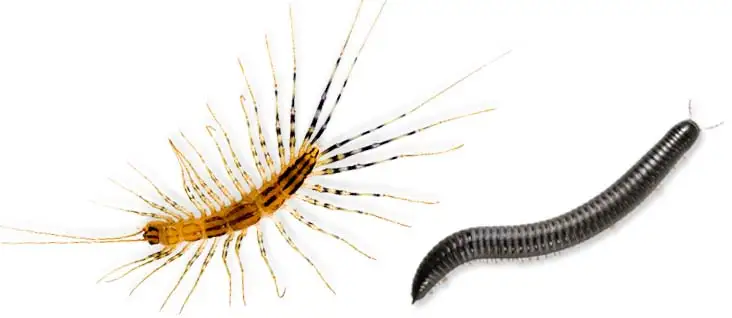
For example, the common house centipede has 15 pairs of legs.
Millipedes:
- Two pairs of legs per segment
- Often hundreds of legs
- Legs hidden beneath the body
Centipedes:
- One pair of legs per segment
- Usually fewer legs overall
- Legs extend outward from the body
This leg structure also affects how they move.
Speed and Movement
Movement is one of the fastest ways to tell them apart.
Millipedes move slowly and steadily. Their legs move in a wave-like pattern that helps them crawl through soil and organic debris.
You will often find millipedes crawling across the forest floor, especially after rain.
Millipede movement usually includes:
- Slow crawling
- Wave-like leg movement
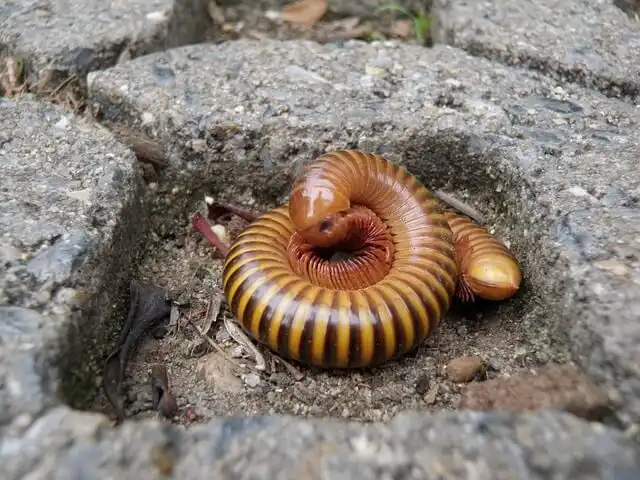
- Curling into a ball when threatened
- Avoiding predators
Centipedes move very differently. They are incredibly fast and agile.
Their flattened body helps them run quickly across surfaces.
Centipede movement usually includes:
- Rapid sprinting
- Quick escape behavior
- Active hunting
This speed helps them catch prey.
Diet and Feeding Habits
Credit: familyhandyman.com
Millipedes and centipedes have completely different diets.
Millipedes feed mostly on decaying plant material. They break down organic matter in soil, which helps recycle nutrients.
If you have ever wondered what millipedes eat, the answer usually includes:
- Dead leaves
- Rotting wood
- Plant debris
- Fungi in soil
This feeding behavior makes them beneficial to ecosystems.
Centipedes are predators.
If you ask what the centipede eats, the answer is much more active prey.
- Ants
- Cockroaches
- Spiders
- Termites
- Other insects
- Occasionally small animals
Because of this, centipedes often act as natural pest control in homes.
Poison vs Venom
A common question people ask is whether these creatures are dangerous.
Many people search for questions like are millipedes poisonous or are millipedes dangerous.
Millipedes are not venomous and cannot bite. However, they do release defensive fluids when disturbed. These chemicals can smell unpleasant and sometimes irritate the skin.
Millipede defense methods include:
- Curling into a spiral
- Releasing defensive fluids
- Avoiding predators
Centipedes are venomous.
Their front legs are modified into venom-injecting claws. These claws help them capture prey.
This is why people sometimes worry about centipede bites.
Most bites cause:
- Mild pain
- Redness
- Swelling similar to a bee sting
If you are curious about how these bites happen and what they feel like, check out our detailed guide on
house centipede bites and whether they are dangerous.
When discussing millipede vs centipede poisonous, the truth is simple: millipedes are not venomous, but centipedes are.
Habitat and Living Environment
Credit: trianglegardener.com
Both creatures prefer moist environments.
Common millipede habitats include:
- Garden soil
- Leaf litter
- Mulch piles
- Compost
- The forest floor
Centipedes can live outdoors as well, but they often enter homes.
Places where centipedes live indoors include:
- Basements
- Bathrooms
- Under sinks
- Crawl spaces
The common indoor species is the house centipede, also known scientifically as Scutigera coleoptrata.
Behavior Around Humans
Millipedes are shy creatures that avoid humans.
- Curling into a ball
- Avoiding conflict
- Living quietly in the soil
Centipedes behave differently because they are hunters.
Most house centipedes are not dangerous to humans. Instead, they help control other pests.
Centipede behavior often includes:
- Active nighttime hunting
- Running across floors or walls
- Hiding in cracks during the day
Because they hunt other insects, they actually provide natural pest control.
Size Differences
Credit: cnybugs.com
Another common question people ask is about centipede vs millipede size.
Millipedes are often larger and thicker.
For example, the giant African millipede, scientifically known as Archispirostreptus gigas, can reach around 12 inches long.
Millipede size characteristics include:
- Thick cylindrical body
- Slow movement
- Some species reach 12 inches
Centipedes vary widely in size as well.
The average house centipede is much smaller, usually about 1–1.5 inches long.
Pest Control and Extermination
Seeing these creatures inside the home can make people uncomfortable. Millipedes usually enter homes accidentally, especially during wet weather.
Centipedes, however, often enter homes to hunt insects. Because they eat pests like cockroaches and flies, they contribute to natural pest control.
Typical treatment plans include:
- Reducing moisture in basements and crawl spaces
- Sealing cracks in walls and foundations
- Removing insect food sources
- Professional pest control services, if necessary
Why People Confuse Them
Both creatures share several similarities.
- Long segmented bodies
- Multiple body segments
- Preference for moist environments
- Ability to hide under rocks or debris
However, their behavior quickly reveals the difference.
Millipedes move slowly and curl up when disturbed. Centipedes move quickly and often run away immediately.
Final Remarks
When comparing millipedes vs centipede, the differences become very clear. Millipedes are slow decomposers that feed on decaying plant material. Centipedes are fast predators that hunt insects and sometimes small animals.
Understanding these differences helps remove unnecessary fear and makes it easier to appreciate the role these fascinating creatures play in nature. If centipedes or millipedes start appearing frequently in your home, professional pest control services can help safely manage and prevent infestations.
Frequently Asked Questions
Here are a few facts about millipedes and centipedes that you might want to know:
Are millipedes poisonous?
No, millipedes are not venomous. However, they release defensive fluids that may irritate the skin.
Are house centipedes dangerous?
Most house centipedes are not dangerous to humans. Their bites are rare and usually mild.
What do millipedes eat?
Millipedes eat decaying plant material such as leaves, wood, and organic debris.
What does the centipede eat?
Centipedes eat insects, spiders, and sometimes small animals, depending on the species.
What is the largest millipede species?
One of the largest species is the giant African millipede (Archispirostreptus gigas), which can grow up to 12 inches long.