Have you ever knocked on a wall or floorboard and it sounded weirdly hollow? Or maybe you spotted a little mud trail creeping up along a baseboard and thought, “Huh, that’s odd”? These might be subtle signs that your home has uninvited guests, termites in wood. These tiny wood‑eating insects don’t bother announcing themselves. Instead, they quietly chew through your wood from the inside out. By the time you notice, the termite damage in wood might already be serious. But don’t worry! I’m here to help you spot the signs of termite damage in wood, understand the termite tunnels in wood, and most importantly, learn how to protect your wood. Let’s give your home the defense it deserves.
Why Termites Are a Hidden Risk
Credit: trustterminix.com
Termites in wood don’t storm in and announce their arrival. They sneak in, typically unnoticed. Many termites feed on wood’s natural cellulose, which is found in everything from furniture to floorboards. Once they find a way in, they can quietly eat through floor joists, wall studs, furniture, or decking — and you might not even notice until it’s too late.
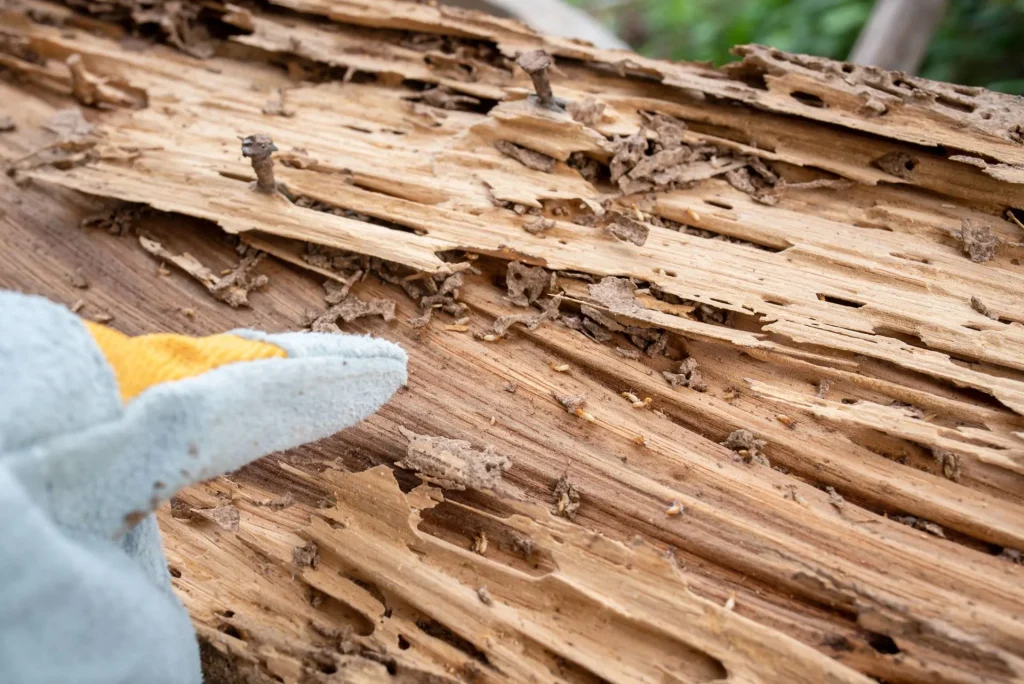
What makes termites eating wood in the house particularly tricky is that they cause the most damage in hidden areas. They chew through wood from the inside, so often, the exterior of your beams, furniture, or walls can look fine while the inside is hollowed out. It’s easy to miss these silent invaders until the damage becomes pretty severe, and your home’s structure starts to weaken. Keeping an eye out for the first signs of a termite infestation can save you a lot of time, money, and stress later on.
Want to learn how to spot the signs early? Keep reading for some quick, easy tips on termite detection and prevention! And for a comprehensive solution, check out our termite control services by BugLady.
Common Types of Termites & How They Attack
There are a few different types of termites, and each one has its own way of causing damage. But the most common ones behave similarly:
- Subterranean termites: These wood termites in the house live in the soil and build mud tubes to travel from the ground to the wooden parts of your house. Subterranean termites are the most common type and can easily infest foundations, wooden beams, and walls.
- Drywood termites: Unlike subterranean termites, these little guys live directly in the wood they infest. They don’t need soil, so they can target wood furniture, window frames, and even wood siding.
Both species can do serious damage, but their behavior is slightly different. Subterranean termites typically stay hidden under the wood, while drywood termites are often inside the wood, quietly feasting.
Signs of Termite Infestation
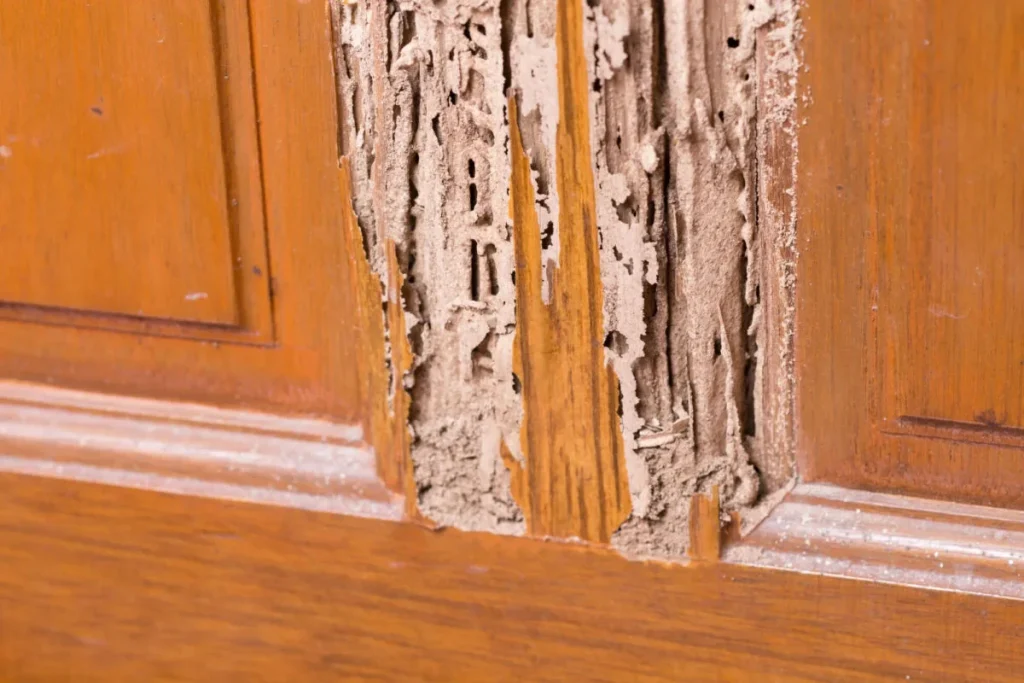
Credit: prodigypest.com
You might not always see the termites in wood themselves, but they leave behind plenty of clues. Here are a few signs of termite damage to look out for:
- Hollow‑sounding wood: Tap on beams, floorboards, or walls. If they sound hollow, termites may have eaten the inside.
- Mud tubes: Subterranean termites create mud tubes to travel from the soil to the wood. These pencil-thin trails can often be found along foundations or walls.
- Swarmers or wings: Termite swarms are adult termites that leave their colonies to find a mate and start new colonies. If you see tiny wings around windowsills or doors, it might be a sign of a larger termite infestation.
- Cracked or bubbling paint: Termite activity can cause moisture to accumulate underneath paint or drywall, leading to bubbles or cracks.
- Wood powder or frass: Drywood termites will often push out droppings that look like small wood particles or dust, which can accumulate near infested wood.
- Working mud tubes: These working mud tubes are essential for termites to travel from the soil to their food source. If you see any of these, it’s a sure sign that termites are in the area.
The earlier you spot these signs, the better. Termite damage in wood can get worse as termites stay hidden longer, so detecting them early is crucial. If you think your home might be at risk, don’t wait until the damage is extensive. For professional termite control and prevention, check out our Termite Control Services by BugLady and protect your home before it’s too late.
How Termite Damage Differs from Wood Rot
It’s easy to confuse termite damage in wood with wood rot. While both cause wood to weaken, they’re different in several ways:
- Wood rot: Typically caused by water damage, wood rot makes the wood soft, spongy, and crumbly.
- Termite damage: Termite holes in wood often leave the wood looking intact on the outside but hollowed out on the inside. You might notice small holes, tunnel patterns, or hollow sounds when tapping on the wood.
While both are serious, the key difference is how they attack. Water damage spreads from the outside in, while termite infestations start from the inside out.
Prevention Tips — How to Keep Termites Away
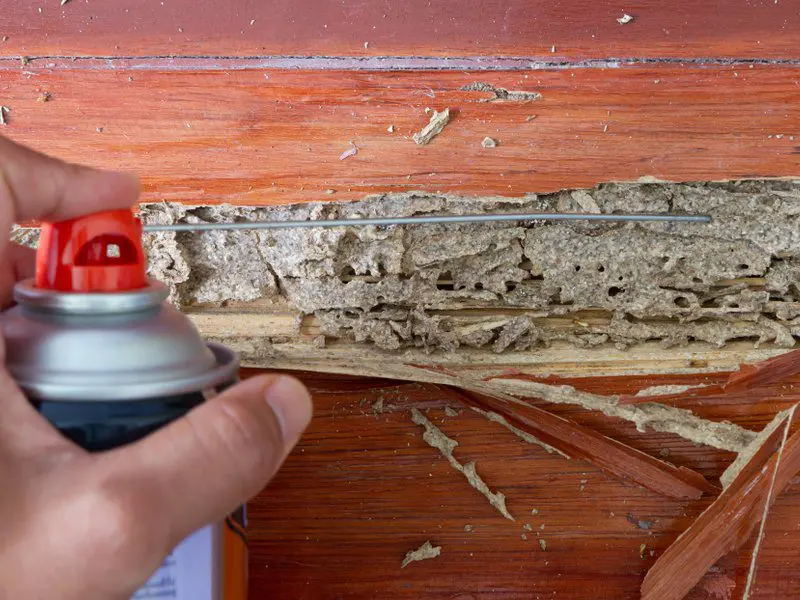
Credit: pest-ex.com.au
The best way to protect your home is to prevent termites in wood from coming in the first place. Here are a few tips to keep termites in wood furniture and your home out:
- Keep wood off the ground: Any wooden parts of your house (like deck posts, siding, or beams) should be elevated to avoid direct soil contact.
- Seal and treat exposed wood: Paint, stain, or use a wood sealant on exterior wood to create a barrier.
- Fix moisture problems: Termites are drawn to moisture. Fix plumbing leaks, clear clogged gutters, and ensure proper drainage around your home.
- Eliminate wood piles and mulch: Termites love wood. Keep woodpiles, mulch, or any wooden debris away from your foundation.
- Inspect regularly: Check your attic, crawl space, and foundation regularly for signs of termite damage.
- Install physical barriers: Consider using termite shields or installing stainless steel mesh under the wood base during construction to block termites.
Taking these steps doesn’t just protect your home today; it prevents costly repairs down the road!
What To Do If You Find Termite Damage
If you notice termite holes in wood, don’t panic. Here’s a simple action plan:
- Stop using the damaged wood: If it’s a structural beam or support, avoid putting weight on it until it’s been treated.
- Call a professional: Termite inspectors can confirm and treat the infestation effectively.
- Treat the infestation: There are a variety of treatments, from chemical treatments to bait systems, that can help eliminate termites.
- Repair the wood: After treatment, replace or reinforce the damaged wood.
- Schedule regular inspections: Even after treatment, make sure you have regular inspections to prevent a second infestation.
Why Early Action Saves You Time and Money
Termite damage in wood can get expensive fast, especially if hidden behind walls or under floors. Early detection and treatment can prevent this from becoming a bigger problem. Remember: the sooner you catch termites eating wood in your house, the easier and cheaper it is to fix the issue.
End Remarks
In a nutshell, termites in wood might be small, but they can do big damage to your home if left unchecked. By staying vigilant, knowing the signs, and acting fast, you can protect your home and avoid costly repairs.
Frequently Asked Questions
Still need help? Here are some of the commonly asked questions about termites in wood and the damage they cause.
How can I tell the difference between termite damage and wood rot?
Termite damage often leaves wood hollowed out, while wood rot makes the wood soft and crumbly.
Can termites survive without soil contact?
Yes, drywood termites live in the wood they infest and don’t need soil contact, making them tricky to spot.
If I see one termite, should I be worried?
Yes, one termite is a sign that there’s likely a colony nearby. It’s best to call a pest professional for an inspection.
How often should I inspect for termites?
Twice a year is ideal. Focus on areas where wood meets soil, and check your crawl space and attic for signs.
Are there eco-friendly ways to treat termites?
Yes! Non-chemical treatments like orange oil, heat treatment, or natural predators can be effective for eco-conscious homeowners.